How to tell ours apart from a coated bag
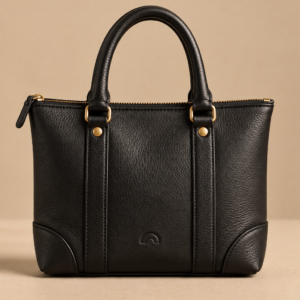
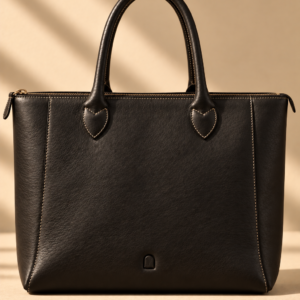
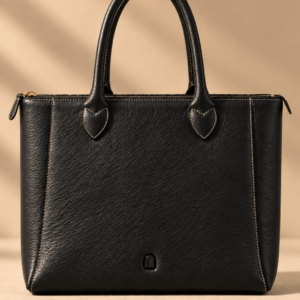
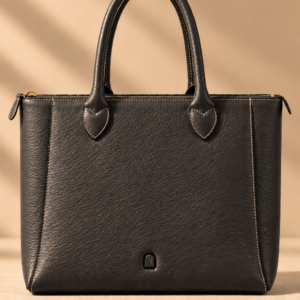
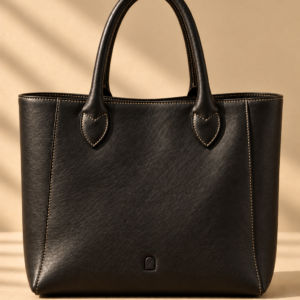
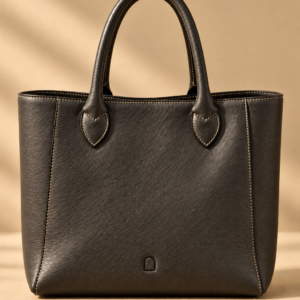
Scratch a pigmented black leather and you get a pale grey line, because the colour is a film sitting on a sanded surface. Scratch aniline dyed full grain and the mark buffs back with a thumb, because the dye has gone through the hide. Ours are the second kind, on every black bag on this page. In daylight they read as very dark brown rather than pure black, which is the giveaway that nothing has been sprayed over the top.
Black across the range
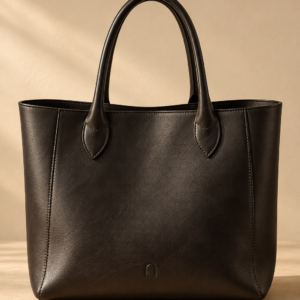
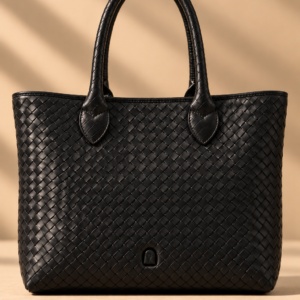
Every design we make comes in black: the open top Marlow in two sizes, the zip top Lorne in two, the hand woven Wren, and the small Juno. The woven black is the one worth looking at twice, because from three paces it reads as a solid panel and only close up does the basketweave appear.
Charcoal, if black feels heavy
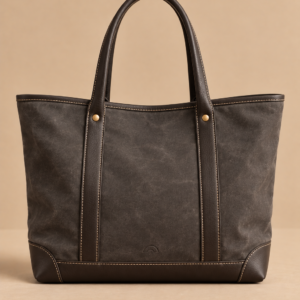
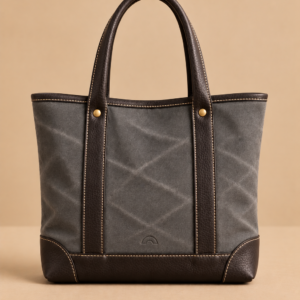
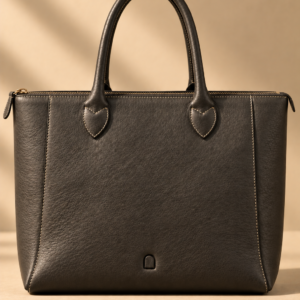
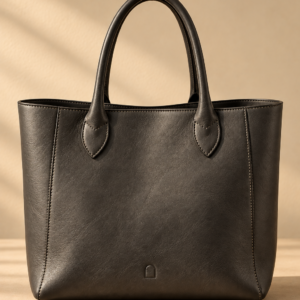
We dye charcoal over a naturally grey hide rather than cutting black with white, so it stays cool rather than turning brown in strong light. It sits between black and brown and belongs to neither, which is the point of it.
Care
Black shows dust, not scratches. A dry cloth once a week does more for it than conditioner does. Do not use a coloured polish on aniline leather, ever.
Black across the nine shapes
| Bag | Opening | Closure | Laptop | Price |
|---|
| Juno, small | 26cm | Brass zip | No | $149 |
| Wren, small, woven | 28cm | Open top | No | $179 |
| Marlow, medium | 35cm | Magnetic tab | 13 inch | $185 |
| Lorne, medium | 36cm | Brass zip | 14 inch | $199 |
| Marlow, large | 40cm | Magnetic tab | 16 inch | $209 |
| Wren, regular, woven | 36cm | Open top | 13 inch | $215 |
| Lorne, large | 41cm | Brass zip | 16 inch | $225 |
Charcoal sits alongside these as a second dark tone. It is dyed over a naturally grey hide rather than black cut with white, so it stays cool instead of turning brown in strong light, and against a black coat it reads as a deliberate choice rather than a near miss.
Two tests you can run on any black bag before you buy
First, look at a photograph taken in daylight. Aniline dyed full grain reads as very dark brown outdoors and only looks pure black indoors. A bag that is identically flat black in every photograph has a pigment film over a sanded surface. Second, look for grain. On real full grain the surface has visible texture and the colour sits slightly deeper inside the grain lines. A perfectly uniform surface has been corrected, embossed and sprayed.
Neither test needs the bag in your hands, which matters when you are buying online and every listing claims full grain.
Why black hides less than people think
Black hides scratches well and dust badly. A week of ordinary use leaves a grey film across the panels that reads as tired, and it comes off with thirty seconds and a dry cloth. Conditioner does almost nothing for this and too much of it will leave a dull bloom, so for black the rule is: dry cloth weekly, neutral conditioner once a year, and never a coloured polish.
The colour we make most of
Black is roughly a third of what leaves our Sialkot workshop, which means it is the colour our cutters have handled most and the one where our hide rejection rate matters least, because a scar shows less on a dark panel. It is also the one that comes back for repair least often, in two years of records. That is not the leather being different. It is that people buy black to use hard, and a bag being used is a bag being looked after.