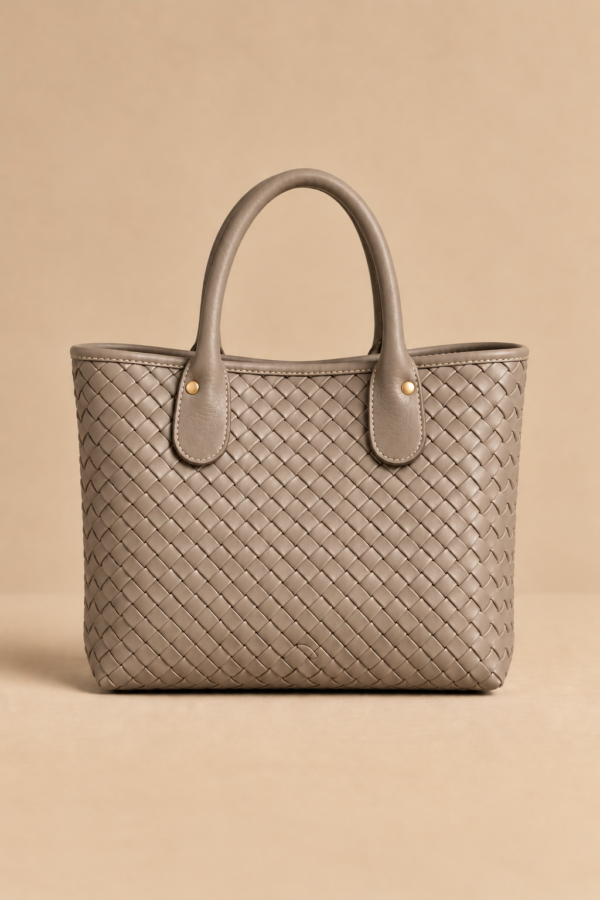
What woven leather is, and what it is not
Woven leather is real leather cut into long strips and interlaced over and under, like a basket or a cane chair seat. On the Wren every strip is full grain, taken from the same kind of hide we use for our smooth bags, so the surface you touch is the original grain with nothing sanded off.
It is worth knowing what gets sold under the same name. Some bags have a weave pattern pressed into a flat panel with a hot plate; the texture is real, the weave is not. Others are woven from strips of bonded or split leather that fray at the edges within a season. If the strands have clean, finished edges and the pattern shows on both faces of a strip, you are looking at the real thing.
Why our basket weave leather bag has a backing
An unbacked weave carries the load on the strands themselves. Put a laptop and a water bottle in it every day and the strands slowly spread, the gaps open, and the bottom of the bag drops into a hammock. That is the complaint most people have about woven bags, and it is a construction problem, not a leather one.
Every Wren weave is built on a complete leather backing, one uncut panel behind the strands. The backing takes the weight; the weave is the face. Underneath, the base is a separate reinforced panel, and each handle passes through the body wall, where it is stitched and then riveted instead of being glued to a tab, so nothing depends on the strands holding a load they were never meant to hold. Inside, a heavy cotton twill lining is stitched in and can be replaced.
Cutting the strands and setting the tension
The strips are cut along the hide so each one stretches the same way, then their edges are finished before a single row goes down. Tension is set by hand, row by row. Pull too hard and the panel puckers and curls at the corners; too soft and daylight shows between the strands. Each row is checked against the last before the next is laid.
That is why a Wren leaves us in 4 to 6 working days rather than the 5 to 7 working days our smooth bags take. Adding a monogram puts roughly one working day on top. We walk through the remaining stages, from hide to finished edge, in our bag making process.
How each color shows the woven leather tote
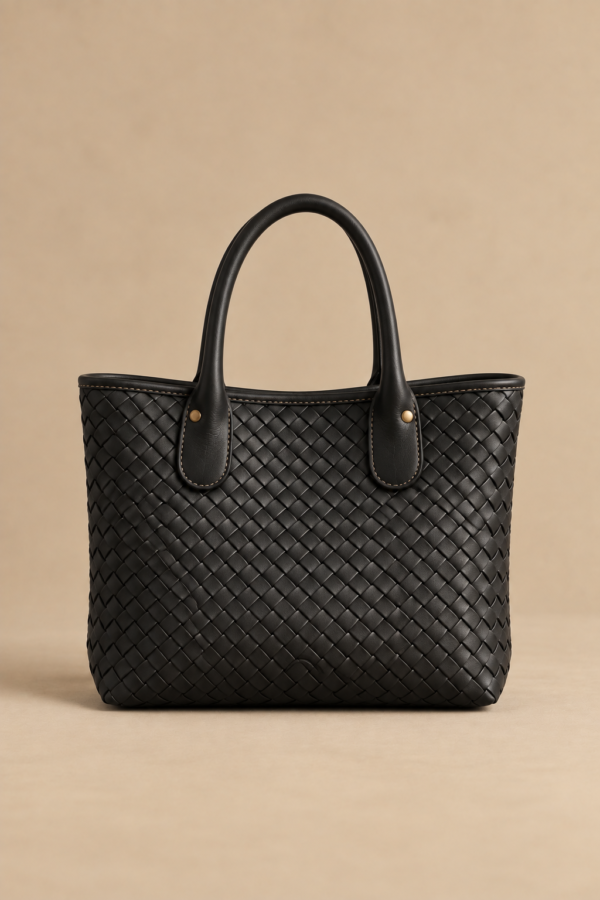
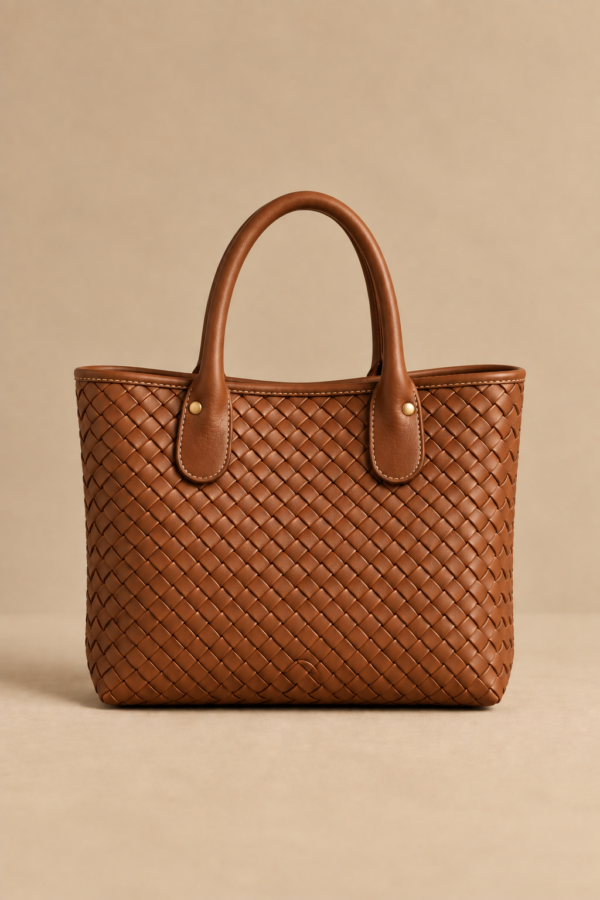
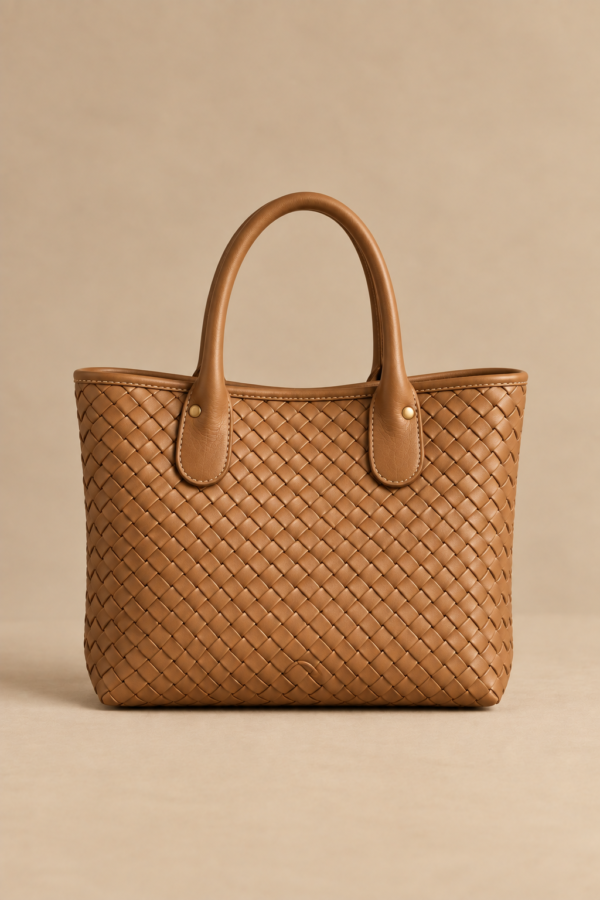
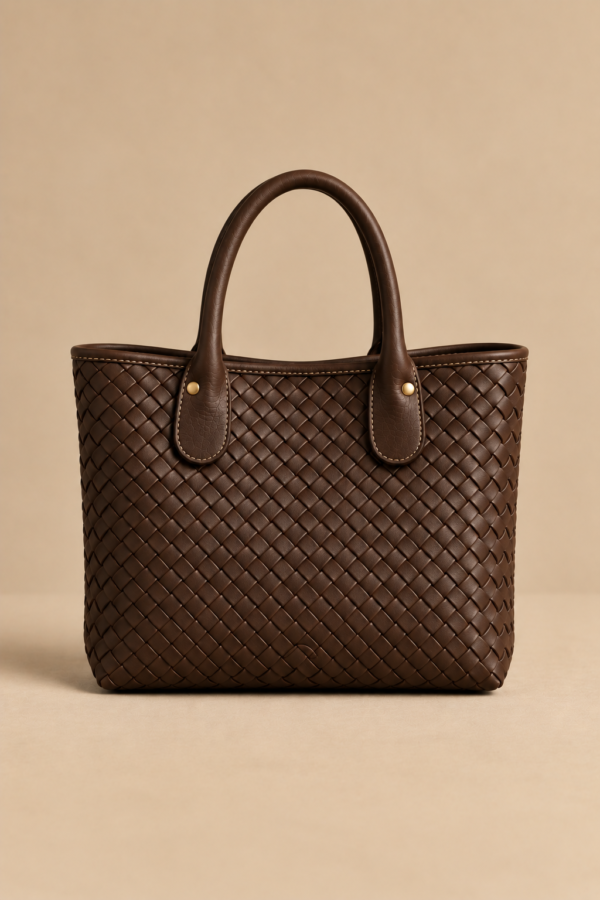
Black reads as a solid panel from across a room, and the weave only appears when you are close; it is the quietest version. Tan is vegetable tanned, the only one of the five that is, so it darkens fastest, with the raised crossings and the handles going first; the guide to vegetable tanned leather explains why. Cognac catches light on every crossing and gives the most depth. Chocolate is dark and forgiving, with soft shadows in the gaps. Stone is the palest and shows the weave most clearly, and also shows dirt soonest.
Black, Cognac, Chocolate and Stone are chrome tanned and aniline dyed through, so they change slowly. If you are set on black, the other shapes in that color are gathered on the black leather totes page.
Two sizes of woven leather bag, for any season
People file woven leather next to straw and put it away in September. It does not belong there: this is leather with a heavy backing, not a beach bag, and Chocolate or Black against a wool coat looks entirely deliberate in February. The regular takes a 13-inch laptop; the small is a day bag that holds an 11-inch tablet but no laptop.
| Bag | Weight empty | Height | Width at opening | Dispatch | Fits |
|---|
| Wren, small, woven | 1.2 lb (0.55 kg) | 9.5" (24 cm) | 11.75" (30 cm) | 4 to 6 working days | 11-inch tablet, no laptop |
| Wren, regular, woven | 1.8 lb (0.8 kg) | 11" (28 cm) | 15" (38 cm) | 4 to 6 working days | 13-inch laptop |
Both are open topped and carried by two handles. If the small is the one you are drawn to, compare it with our other small and mini totes before you decide.
Keeping a weave clean
Dust settles in the crossings, so a soft dry brush does more than a cloth. Work it along the rows, then go over the surface with a cloth that is only just damp and leave the bag to air at room temperature, away from a radiator. Conditioner goes on sparingly with the same brush, and anything left sitting in the gaps is lifted off before it dries. The full routine is in the leather bag care guide.