What large means here
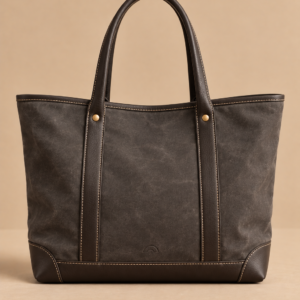
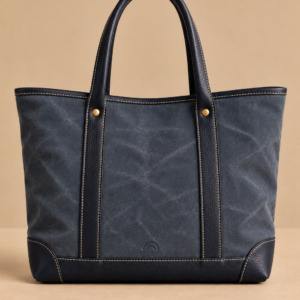
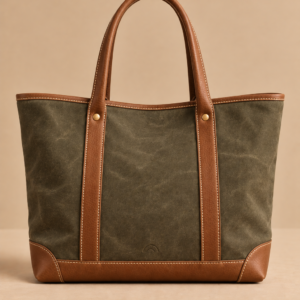
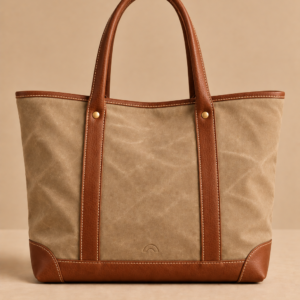
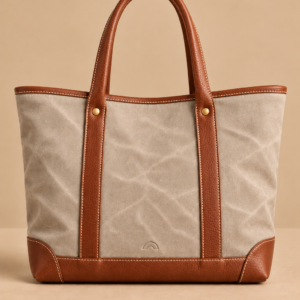
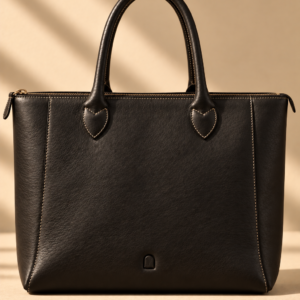
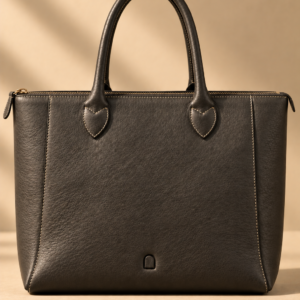
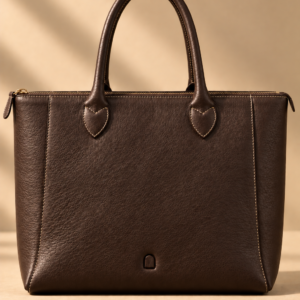
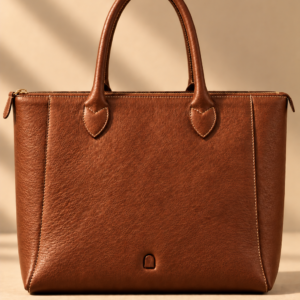
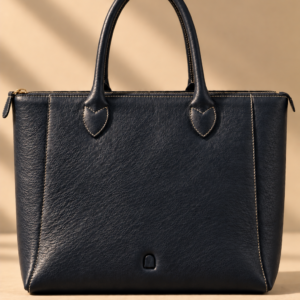
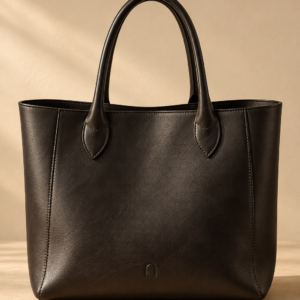
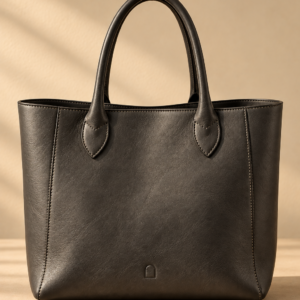
Three of our designs come in a large: the Marlow at 40cm, the Lorne at 41cm with a padded laptop wall, and the Ellis at 42cm, which is the widest and, because it is waxed canvas, also the lightest. All three take a 16 inch laptop lying flat against the back panel with room for a folder beside it.
The part that fails on a big tote
Corners. A large bag carries more weight, and a base that is folded up from the side panels bows outward until the corners crease and split. Every large bag here has a base cut as its own panel, reinforced, and stitched in, so the load sits on the panel rather than on the fold. The Lorne adds four brass feet underneath because a bag that size spends its life on floors.
Weight before you commit
A large leather tote weighs 1.1kg to 1.3kg empty. Add a laptop and a bottle and you are carrying four kilos on one shoulder. If that is your daily commute, look at the canvas version at 0.95kg, or drop to a medium. We would rather tell you that now than take the return later.
Smaller options
If this page is more bag than you need, the small totes run from 26cm to 30cm and start at $135.
The three large totes, measured
| Marlow, large | Lorne, large | Ellis, large |
|---|
| Opening | 40cm | 41cm | 42cm |
|---|
| Height | 30cm | 30cm | 32cm |
|---|
| Depth at base | 14cm | 14cm | 15cm |
|---|
| Handle drop | 24cm | 22cm | 25cm |
|---|
| Weight empty | 1.1kg | 1.3kg | 0.95kg |
|---|
| Closure | Magnetic tab | Full length brass zip | Leather tab |
|---|
| Laptop | 16 inch, flat against the back | 16 inch, padded sleeve | 16 inch, flat against the back |
|---|
| Material | Full grain leather | Full grain leather | Waxed canvas and leather |
|---|
| Price from | $209 | $225 | $159 |
|---|
How to tell a well made large tote from a badly made one
Turn it over. If the base is the side panels folded under and stitched, the weight sits on a fold and that fold will crease, then crack, then split, usually in the second year. A base cut as its own panel and stitched in takes the load flat. Then look at where the handles meet the body: a handle attached to a glued tab is the second failure point, and no amount of leather quality saves it. Ours are stitched through the body panel and riveted in solid brass at both ends.
The third thing is the edges. A painted edge is fast and looks perfect for a year, then peels off in a strip. A burnished edge is sanded and rubbed down in four passes until the fibres compress, and it dulls rather than fails. None of our bags have edge paint anywhere on them.
What a large tote is not good at
Being half full. At this size an unstructured bag swallows small things and a structured one rattles, so if most days you carry a phone, a purse and keys, the small totes will serve you better and cost less. It is also the wrong bag for a long walking commute, because 1.1kg empty plus a laptop is four kilos on one shoulder. The canvas Ellis is the honest answer there at 0.95kg.
Our work on a large bag
A large tote takes about four square feet of full grain hide and most of a working day. We reject roughly one hide in seven for scarring in the wrong place, which on a large panel matters more than on a small one because there is nowhere to hide a flaw. Two years of doing this in the same Sialkot workshop means the rejection happens at the cutting table rather than reaching you.