Can Leather Get Wet? What Water Does to Leather and How to Fix It
Leather can get wet. A little rain won't hurt most leather bags, but soaking and drying it wrong will. Here's what water actually does to leather, which types cope best, exactly how to dry it, and how to remove water marks.

Yes, leather can get wet. Light rain and splashes won’t harm most finished leather bags if you blot them and let them dry slowly at room temperature. What damages leather is soaking, staying wet for a long time, and drying too fast with heat, which can leave water stains, stiffness, shrinkage, cracking or mold. Suede, nubuck and unfinished leathers are the most vulnerable.
So the real question isn’t “can leather get wet?” but “what do I do when it does?” We make leather bags that get carried through rain every day, and the bags that come back damaged were almost never ruined by the rain. They were ruined by the radiator afterward. This guide explains what water actually does to leather, how each leather type copes, a step-by-step drying method, and how to fix water marks.
Quick answer: A shower is fine; a downpour needs care. Blot, don’t rub. Stuff the bag with paper. Dry it at room temperature, away from heat and sun. Condition once it’s fully dry.
Is leather waterproof?
No. Leather is water-resistant, not waterproof. Its fibers are porous, so water eventually works in through the surface, seams and stitch holes. Finishes, waxes and oils slow that down a lot, which is why a finished leather bag sheds a shower easily.
The difference matters legally too. The FTC’s Guides for bags and leather goods say a product should only be called “waterproof” if it “prevents water from contact with its contents under normal conditions of intended use during the anticipated life of the product” (16 CFR 24.3). Almost no stitched leather bag meets that bar, which is why honest makers say “water-resistant.”
What water does to leather
Leather is a mesh of collagen fibers that tanning has stabilized and fat-liquoring has lubricated with oils. When water soaks in:
- The fibers swell and soften. Wet leather stretches and deforms more easily, so a soaked bag can lose its shape if it’s hung by the strap or stuffed with something heavy.
- Oils and soluble substances move. As water evaporates, it travels to the surface and carries some oils, tanning agents and minerals with it. They’re left behind at the edge of the wet patch: that’s the classic water ring or tide mark.
- Drying can stiffen it. With some of the lubricating oils carried off, the fibers can bond more tightly as they dry, so leather feels stiff or brittle.
- Heat makes everything worse. Wet leather is much more sensitive to heat than dry leather. Tanners measure a “shrinkage temperature” for leather, and wet heat can cause shrinking, hardening and cracking, more readily on vegetable-tanned than chrome-tanned leather. A hair dryer or radiator does far more damage than the rain did.
- Long dampness invites mold. A bag left damp in a closet, a car trunk or a plastic bag can grow mildew within days in warm conditions.
Iowa State University Extension’s advice on leather garments is the same as ours for bags: if it gets wet, let it air dry away from heat, and never store leather in a plastic bag (ISU Extension).
How different leathers handle water
| Leather / material | Light rain | Soaking | Notes |
|---|---|---|---|
| Pigmented / finished smooth leather | Fine; water beads | Usually recovers if dried slowly | The most forgiving smooth leather |
| Pull-up, waxed or oiled (e.g., buffalo) | Fine; may darken briefly | Recovers well; rub to redistribute waxes | Oils and waxes resist water; condition after soaking |
| Pebbled leather | Fine | Usually dries evenly | Texture hides marks |
| Aniline / unfinished full grain | Spots possible | Rings and darkening likely | Even re-dampening can blend marks |
| Vegetable-tanned (untreated) | Spots, darkens | Can stiffen and stain | Some marks become permanent patina |
| Suede and nubuck | Can mark and mat | High risk of rings and stiffness | Protect with spray; brush after drying |
| Hair-on cowhide | Hair sheds light rain | Hide can stiffen; hair can mat | Dry flat, brush with the hair |
| Patent leather | Very water-resistant | Water can enter at seams and cracks | Wipe dry immediately |
| Nappa / lambskin | Can spot (aniline) | Delicate; can stiffen | Blot gently; condition after |
| Waxed canvas with leather trim | Beads off | Resists well; canvas can darken until dry | Re-wax when water stops beading |
| PU / faux leather | Beads off | Seams let water in; heat and humidity degrade it | Wipe dry |
Not sure which you own? Our types of leather guide helps, and finishes like patent, nappa and pebbled have their own guides.
What to do if your leather bag gets wet
- Empty it. Take everything out, especially paper, electronics and anything that can bleed color. Open all pockets.
- Blot, don’t rub. Press a dry, white, absorbent cloth or towel onto the surface to lift water. Rubbing wet leather can scuff the swollen grain and push dirt in.
- Dry the inside. Blot the lining. If the lining pulls out, turn it out.
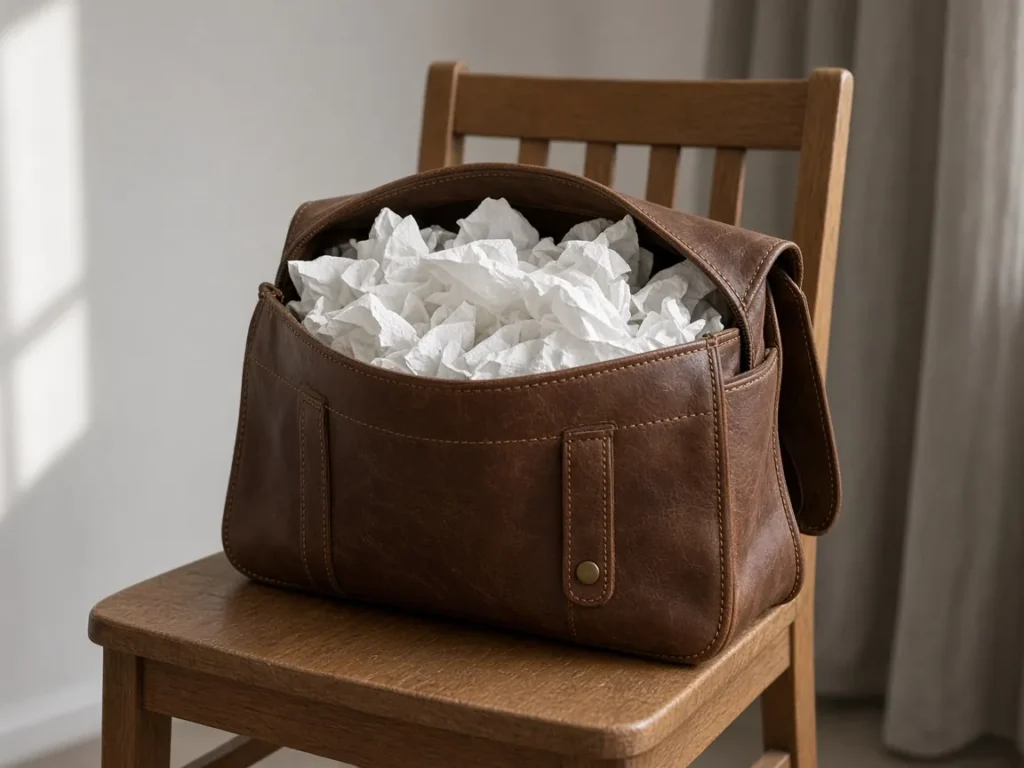
- Stuff it. Fill the bag loosely with plain white paper towels, acid-free tissue or a clean cotton T-shirt to hold its shape and draw out moisture. Avoid newspaper, whose ink can transfer. Change the stuffing when it’s damp.
- Dry it at room temperature. Sit it upright on a flat surface, or on a chair, in a ventilated room. Not on a radiator, not by a heater, not in direct sun, not with a hair dryer.
- Be patient. A lightly wet bag dries in a few hours; a soaked bag can take one to two days.
- Condition once it’s completely dry. Apply a thin coat of conditioner to smooth leather to replace lost oils and restore softness. Skip this for suede, nubuck and patent.
- Buff and check. On pull-up and waxed leathers, rub the surface with your hand or a soft cloth to redistribute waxes and even the color.
Drying do’s and don’ts
| Do | Don’t |
|---|---|
| Blot with a white cloth | Rub or scrub the wet surface |
| Stuff with paper or a cotton T-shirt | Use newspaper (ink transfer) |
| Dry upright at room temperature | Use a hair dryer, radiator, heater or sun |
| Keep air moving (open window, fan on low) | Seal it in a plastic bag or closet while damp |
| Condition once fully dry | Condition while wet; it traps moisture |
| Support the shape | Hang a soaked bag by its strap |
How to remove water stains from leather
Smooth leather (finished). Most spots disappear as the leather dries. If a ring remains, wipe the whole panel with a cloth barely dampened with clean (ideally distilled) water, from seam to seam, so the panel dries evenly with no edge. Let it dry at room temperature, then condition.
Aniline and vegetable-tanned leather. Use the same seam-to-seam method with very little water. Some darkening may remain; on vegetable-tanned leather, it often blends into the patina over time.
Suede and nubuck. Let the mark dry completely, then brush with a suede brush. If a ring remains, lightly and evenly dampen the whole panel with a damp sponge, blot, let it dry, and brush again to lift the nap. Finish with a suede protector.
Salt lines (winter). Wipe with a cloth barely dampened in a 50/50 mix of water and white vinegar, then with plain water, let it dry and condition. Salt pulls moisture out of leather and leaves white tide lines, so treat it quickly.
Sea water and pool water. Wipe the bag with a cloth dampened in fresh water to remove salt or chlorine as soon as you can, then dry and condition as above.
If a stain won’t shift, or the leather has gone stiff and cracked, take it to a leather specialist. For other stains, see our full guide on how to clean a leather bag.
What if leather gets soaked or submerged?
Bags dropped in a pool, left out in a storm or packed in a flooded suitcase need extra care:
- Get it drying fast but gently. Empty, blot and stuff immediately; replace the stuffing often.
- Check internal parts. Card or board stiffeners in the base and sides can warp or soften. A cobbler or bag maker can sometimes replace them.
- Check the hardware. Solid brass and stainless steel shrug off water; plated hardware can tarnish or pit. Dry it with a cloth.
- Watch for mold over the next week: musty smell or white or green bloom. Clean it outside with a brush and a 50/50 water and white vinegar wipe, then dry fully.
- Expect some change. Fully soaked leather may end up slightly darker, firmer or more creased. Conditioning helps, but it may not be identical.
A simple rain plan for your leather bag
Before the season

- Clean and condition smooth leather so it’s nourished going into wet months.
- Spray suede and nubuck with a protector (test first, let it cure).
- Re-wax waxed canvas if water no longer beads on it.
- Put a small microfiber cloth in an inside pocket.
When you’re out in it
- Carry the bag with the flap or zip closed and the opening toward your body.
- Wear crossbody bags under an open coat, or tuck a tote under your arm.
- In a real downpour, put the bag inside a cheap nylon tote or under your coat. Leather survives rain; it hates soaking.
- Don’t set it down on wet pavement, train floors or car mats.
When you get home
- Wipe and blot it straight away; don’t leave it in a wet heap by the door.
- Empty it, stuff it and leave it to dry somewhere airy, not next to the heating.
- Condition the next day if it got properly wet.
Humidity, snow and heat: the other water problems
Humid climates. Leather absorbs moisture from the air. In a humid home, bags stored in closed closets can grow mold even without rain. Keep them in breathable cotton dust bags, leave closet doors open now and then, and use a dehumidifier or moisture absorbers in damp rooms.
Snow. Snow itself is just water, but it melts on a warm bag and soaks in more slowly and evenly than rain, so brush it off before you go indoors. The bigger risk is road salt splashing onto the base and lower panels; wipe it off the same day.
Hot, dry air. The opposite problem: radiators, car dashboards and sunny windowsills dry leather out until it cracks, wet or not. Store bags away from heat sources year-round.
How to protect leather from water
- Choose the right leather for your climate. Pull-up, waxed and finished leathers handle rain far better than suede or pale aniline.
- Condition regularly (two or three times a year). Well-nourished leather repels water better and recovers faster.
- Use a protector spray suited to the leather. Suede and nubuck benefit most. Test it first on a hidden area, and reapply as directed. Avoid silicone sprays on smooth leather; they can darken it and stop it taking conditioner.
- Wax for heavy-duty leathers. Beeswax-based products add water resistance to rugged, oiled leathers, but can darken them. Not for fine handbags.
- Carry a backup. A foldable nylon tote or umbrella costs little. In real downpours, put the leather bag inside.
- Store it dry. Never put a damp bag away in a closed closet or plastic.
Choosing a bag for wet weather
If you commute on foot or by bike in a rainy city, look for:
- A flap or zip closure, so rain doesn’t land on what’s inside.
- Pull-up or waxed leather, or waxed canvas with leather trim. Our buffalo leather bags use an oiled, pull-up finish where scuffs and water marks rub back out; our waxed canvas bags shed rain from the canvas body.
- A leather base that’s a separate panel, so the bottom isn’t sitting in puddles on fabric.
- Solid brass or stainless hardware, which won’t flake.
- Darker colors, which hide temporary water darkening.
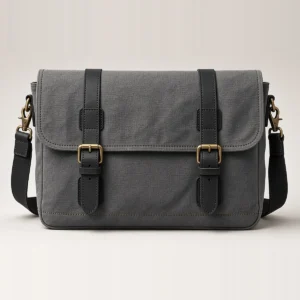
For example, our Penrith waxed canvas messenger is built for a wet commute, with a full flap and buckled straps. If you love pale suede, keep it for dry days; a suede protector spray helps, but it won’t make it rain-proof.
Traveling somewhere wet? See our best travel handbags for bags that cope with the weather. Want the long-term routine? Read how to care for leather bags, or explore the Leather Guide.
Bags mentioned in this guide
Frequently asked questions
Is it bad if leather gets wet?
Not usually. A bit of rain won’t harm most finished leather if you blot it and let it dry slowly. Damage comes from soaking, staying damp for a long time, or drying with heat, which can cause stains, stiffness and cracking.
Can you wear leather in the rain?
Yes, for short periods. Finished, waxed and pull-up leathers handle rain well. Avoid wearing suede, nubuck or pale unfinished leather in heavy rain, and dry anything that gets wet at room temperature.
What happens if leather gets soaked?
Fully soaked leather swells, softens and loses some of its oils. If it then dries too quickly or near heat, it can stiffen, shrink, crack or develop water rings. Drying it slowly, stuffed to hold its shape, and conditioning it afterward usually restores it.
How do you dry wet leather quickly?
Safely, you can’t rush it much. Blot thoroughly, stuff with absorbent paper and change it often, and dry in a ventilated room with a fan on low. Never use a hair dryer, heater or direct sun.
Do water stains on leather go away?
Many do once the leather dries fully. If a ring remains on smooth leather, evenly dampen the whole panel from seam to seam and let it dry again. Some marks on unfinished or vegetable-tanned leather can be permanent.
Can suede get wet?
Suede can get wet but marks easily. Let it dry naturally, then brush to restore the nap. If a ring remains, evenly dampen the whole panel, blot, dry and brush again. Protect suede with a protector spray before wearing it.
Does conditioning make leather waterproof?
No. Conditioning keeps leather supple and helps it resist and recover from water, but it doesn’t make it waterproof. Wax-based products add more water resistance, mainly on rugged, oiled leathers.
Can leather get moldy after getting wet?
Yes, if it stays damp, especially in warm places or sealed in plastic. Dry it fully, store it in a ventilated space in a cotton dust bag, and clean any mold outside with a brush and a diluted white vinegar wipe.
Is buffalo leather water-resistant?
Pull-up buffalo leather is oiled and waxed, so it handles rain well and water marks usually rub out as the oils redistribute. Like all leather, it’s water-resistant, not waterproof, so dry it slowly after a downpour.