What Is Nappa Leather? Meaning, Types, Durability and Care
Nappa leather is a soft, smooth leather, usually full-grain, from lamb, kid, calf or cow. Here's what the name really guarantees (less than you think), the three finish types, how it compares to full grain, and how to care for it.
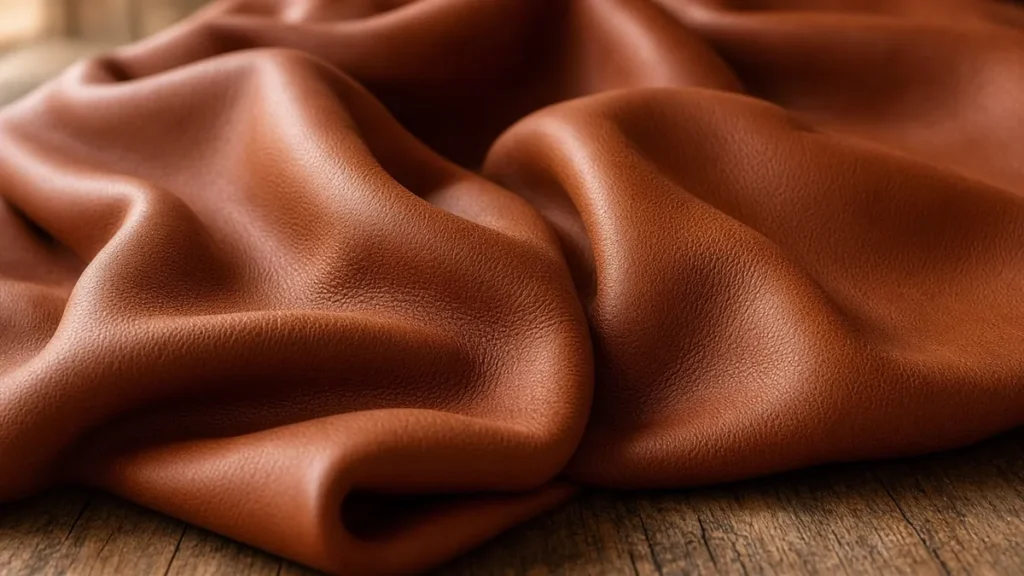
Nappa (or napa) leather is a soft, smooth, supple leather, usually full-grain and most often made from lambskin, kidskin, calfskin or cowhide, that is tanned and lightly finished to feel buttery and drape like fabric. It is a description of feel and finish, not a legally protected grade, so two products labeled “nappa” can be very different in quality.
That last point is the one most guides miss, and it’s the one that matters when you’re paying extra for it. As bag makers who work with soft and firm hides every day, we’ll walk through what nappa actually means, where the name comes from, the three types you’ll meet, how it compares to full grain, why car makers love the word, and how to look after it.
Quick answer: Nappa = soft, smooth, usually full-grain leather from young or fine-grained hides, tanned for suppleness and lightly finished. It’s real leather and feels luxurious, but it scratches more easily than firmer leathers, and “nappa” on a label isn’t a guarantee of grade.
Where the name “nappa” comes from
The name comes from Napa, California. In the late 1800s, the Sawyer Tanning Company in Napa produced a soft, durable leather developed by tanner Emanuel Manasse, and “Napa leather” became a trade name that tanneries in America and Europe soon copied (Wikipedia). German retailer Manufactum describes the original as especially supple chrome-tanned glove and clothing leather from Napa Valley tanneries (Manufactum).
Both spellings are used today. “Nappa” is more common in fashion and cars; “napa” is the original place-name spelling. They mean the same thing.
What makes a leather “nappa”?
There’s no single test or legal standard; Wikipedia notes nappa is “a generic term in the leather field and has no distinct test for characterization.” In practice, leather sold as nappa shares four traits:
- A fine, soft hide. Lamb, kid (young goat) and calf have small, tight grain and thin skin. Cowhide nappa is common too, especially in cars and larger bags.
- Full grain, or close to it. The Leather Working Group’s industry glossary describes napa as “soft full grain leather through dyed and lightly finished” (LWG). The grain is kept, not sanded off.
- Tanned and fat-liquored for softness. Most nappa is chrome-tanned, then generously treated with oils (fat-liquoring) so the fibers stay loose and supple. Vegetable- and synthetic-tanned nappas exist too.
- Dyed through and lightly finished. The color goes into the leather, and the surface coating is thin, so it feels warm and soft rather than plasticky.
If you want the full picture of grades and tannages, our overview of types of leather covers them in one page.
How nappa leather is made
Every tannery has its own recipe, but nappa production follows the same broad path as other leathers, tuned at each step for softness:
- Hide selection. Small, clean skins (lamb, kid, calf) or top-quality cowhides with few surface marks, since the grain won’t be sanded off to hide flaws.
- Tanning. Usually chrome tanning, which produces a soft, stretchy, color-stable leather in days rather than weeks. Some nappas use vegetable or synthetic tannins instead.
- Splitting and shaving. The hide is taken down to an even, fairly thin substance so it drapes.
- Dyeing through. The leather is drum-dyed so color runs through the thickness, which is why a scratch on good nappa doesn’t show a pale core.
- Fat-liquoring. Oils are worked into the fibers to keep them lubricated and loose. This is the step most responsible for the “buttery” hand.
- Softening. Mechanical staking or tumbling flexes the fibers further.
- Light finishing. Little or no pigment for aniline nappa; a thin protective coat for semi-aniline; a fuller pigmented finish for automotive and upholstery grades.
The trade-off sits in steps 3 and 5: thinner, oilier leather feels wonderful and drapes, but resists abrasion and stretching less than a thicker, firmer hide.
The three types of nappa leather
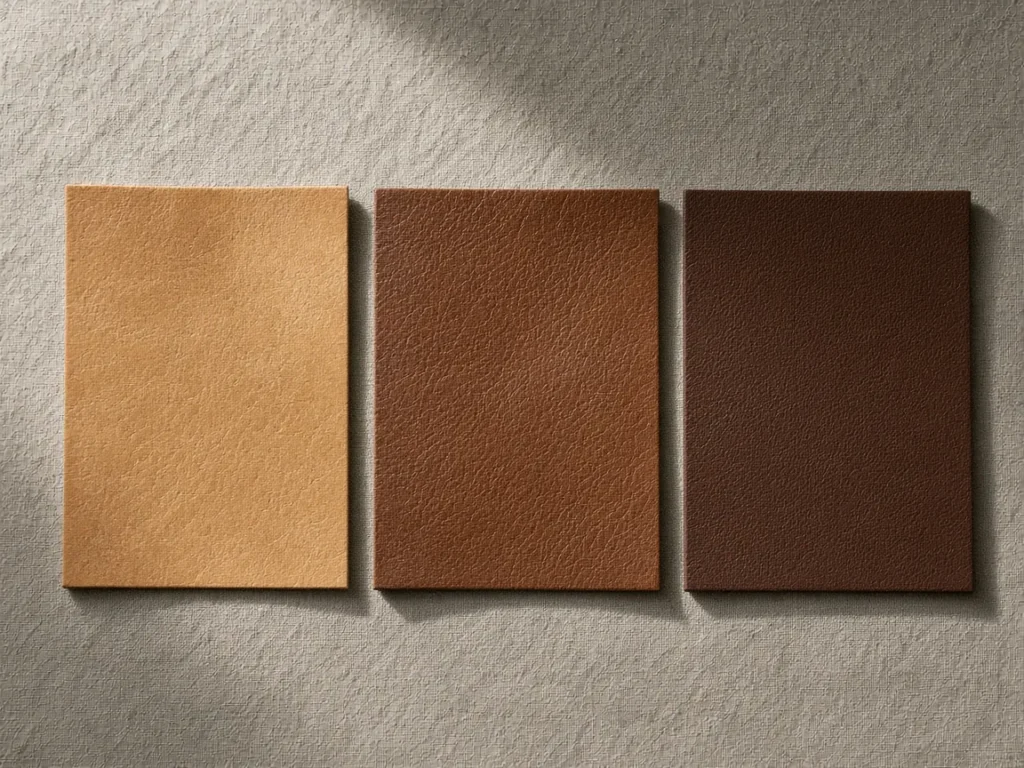
Nappa covers a range of finishes, from almost bare to fully pigmented. Knowing which one you’re buying tells you more than the word “nappa” alone.
| Finish | What it is | Look and feel | Durability | Best for |
|---|---|---|---|---|
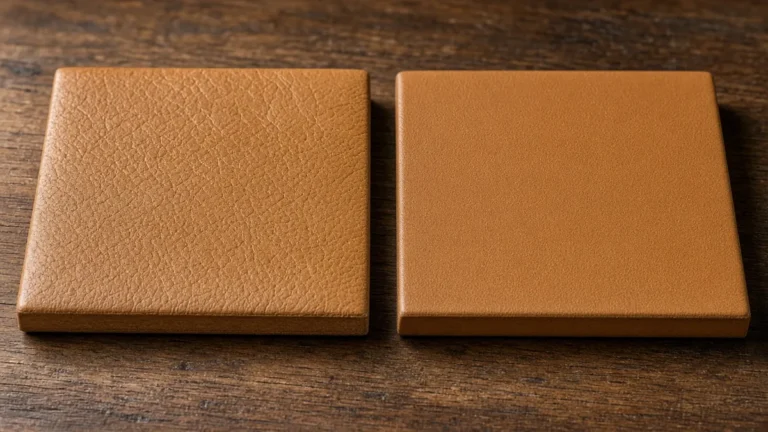
| Aniline nappa | Dyed through, no pigment on top; pores fully visible | Warmest, softest, most natural | Marks, stains and fades easily | Gloves, luxury garments, occasion bags |
| Semi-aniline nappa | Light pigmented finish; grain still visible | Soft, slightly more even color | Better stain and scratch resistance | Handbags, jackets, upholstery |
| Pigmented (protected) nappa | Grain covered by a pigmented finish | Smooth, uniform, cooler to touch | Most resistant to scuffs, spills and sun | Car seats, family sofas, work bags |
These categories follow standard leather vocabulary: aniline leather has a clearly visible natural grain with no pigmented coating; semi-aniline has a small amount of pigment; pigmented leather’s surface is completely concealed by the finish (LWG).
Is nappa leather real leather?
Yes, real nappa is genuine animal leather. But watch for three things that borrow the name:
- “Nappalan.” A material where the flesh (underside) of a split hide is coated to look like smooth nappa. It’s leather, but a lower split, and the coating can scuff off (Manufactum; LWG).
- “Vegan nappa” or “nappa-look.” Polyurethane on fabric. No leather at all. (See PU leather vs real leather.)
- Car-trim names. Many automakers sell synthetic upholstery under their own names (for example “MB-Tex” or “SofTex”) alongside optional nappa packages. Read the spec sheet: one is leather, the other isn’t.
In the US, the FTC’s leather guides say non-leather materials that look like leather should be disclosed as such (16 CFR Part 24). If a listing avoids the word “leather” entirely, assume it isn’t.
Nappa vs full grain, top grain and other leathers
People often ask “is nappa better than full grain?” They aren’t really opposites: most nappa is full grain. The useful comparison is softness and finish.
| Nappa | Firm full-grain (e.g., bag cowhide) | Top-grain / corrected | Lambskin (non-nappa) | PU “vegan nappa” | |
|---|---|---|---|---|---|
| Grain | Full, smooth | Full, visible pores and marks | Sanded and refinished | Full, very fine | Printed on plastic |
| Feel | Buttery, drapes | Firm to medium, holds shape | Even, smoother | Very soft, thin | Smooth, cool, rubbery |
| Scratch resistance | Low–medium | Medium–high (often buffs out) | Medium | Low | Medium until it peels |
| Patina | Gentle (aniline), little (pigmented) | Strong | Little | Gentle | None |
| Structure | Needs lining or interfacing | Stands on its own | Medium | Needs support | Depends on backing |
| Typical use | Gloves, jackets, soft bags, car seats | Totes, briefcases, belts | Mid-range bags, furniture | Jackets, small goods | Fast fashion, budget furniture |
For the difference between full grain and top grain in detail, read full-grain vs top-grain leather.
Nappa leather in cars
“Nappa leather seats” is one of the most common ways people meet the word. Automotive nappa is usually cowhide, often semi-aniline or pigmented so it can survive sun, jeans rivets and spilled coffee, and frequently perforated for ventilated seats. It’s softer and more expensive than standard automotive leather, which is often more heavily corrected and coated.
Three tips if you’re comparing trims:
- Ask what “nappa” covers. Sometimes only the seat faces are nappa; sides and backs may be a different leather or synthetic.
- Perforated seats need gentler cleaning. Spray cleaner onto a cloth, never onto the seat, so liquid doesn’t soak into the holes.
- Light colors show dye transfer. Blue from new denim is the most common complaint on pale interiors.
Pros and cons of nappa leather
Pros
- Exceptionally soft and comfortable against skin.
- Drapes beautifully, so it suits slouchy bags, gloves and garments.
- Rich, even color, because it’s dyed through.
- Real leather: breathes and, with care, lasts years.
Cons
- Scratches and scuffs more easily than firmer, thicker leathers.
- Aniline nappa stains and fades if left in sun or exposed to oils.
- Needs a lining or structure to hold a bag’s shape.
- Premium price, and the name alone doesn’t guarantee grade.
Is nappa leather durable?
It’s durable in the sense that matters for clothing and gloves: it flexes thousands of times without cracking and wears gracefully. It’s less durable in the sense that matters for a heavy work bag: a thin, soft hide resists abrasion and stretching less than a thick, firm one. A pigmented nappa will look newer for longer than an aniline one.
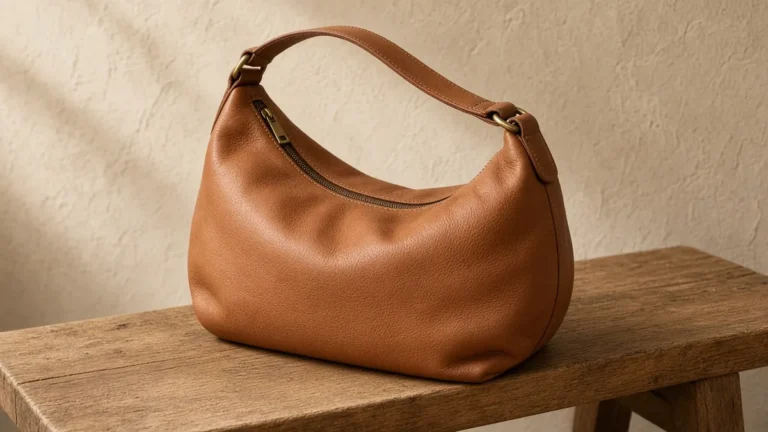
If you want softness but daily-bag toughness, a milled full-grain cowhide is the middle ground. Tumbling the hide in a drum relaxes the fibers so it drapes, while keeping the thickness that resists wear. It’s what we use for our softest bag, the Selby slouchy shoulder bag. More on milled textures in what is pebbled leather?
How to tell if it’s good nappa
- Feel the hand. Real nappa is warm, soft and slightly “grippy.” Cold, slick and rubbery suggests a heavy pigment finish or PU.
- Look for pores. Tilt it under light. Fine, irregular pores mean grain; a perfectly repeating texture means embossing.
- Fold a corner. Good nappa creases softly and recovers. Fine cracks in the surface mean a thick, brittle finish.
- Check the edge or underside. Leather shows fibers; synthetics show fabric.
- Read the full spec. Animal (lamb, calf, cow), finish (aniline, semi-aniline, pigmented) and whether it’s leather throughout.

How to care for nappa leather
- Dust and wipe gently. A soft, dry microfiber cloth weekly. For dirt, a cloth barely dampened with water.
- Clean with a pH-balanced leather cleaner. Apply it to the cloth, not the leather. Spot-test on a hidden area, especially on aniline nappa.
- Condition lightly. A thin coat of a neutral conditioner two to three times a year is plenty. Too much leaves soft leather greasy and floppy.
- Keep it out of direct sun and away from heat. Aniline nappa fades and dries out fastest.
- Blot spills immediately. Don’t rub. Let it dry at room temperature. (Our guide to whether leather can get wet has the full drying method.)
- Store it stuffed and in a dust bag. Soft leather creases where it’s folded.
For bags specifically, see how to clean a leather bag.
Is nappa a good choice for a handbag?
Nappa makes lovely soft bags: hobos, slouchy shoulder bags, clutches and pouches. It’s a less obvious choice for a structured work tote or briefcase that gets dropped on floors and stuffed with a laptop.
We don’t sell bags described as nappa. For a soft everyday bag, look at our milled full-grain slouchy shoulder bags; for structure that improves with age, our full-grain leather bags; and if softness is what you want most, suede bags have a velvety feel of their own. You can compare every material we use under Shop by Leather, or read more in our Leather Guide.
Bags mentioned in this guide
Frequently asked questions
Is nappa leather real leather?
Yes. Genuine nappa is real animal leather, usually full-grain lamb, kid, calf or cowhide. “Vegan nappa” and “nappa-look” materials are synthetic, and “nappalan” is a coated lower split, not true nappa.
What is the difference between nappa and napa leather?
None. “Napa” is the original spelling, from Napa, California; “nappa” is the more common modern spelling. Both describe the same soft, smooth leather.
Is nappa leather better than full-grain leather?
They aren’t opposites, because most nappa is full grain. Nappa is softer and more delicate; firmer full-grain leathers are tougher and hold shape better. Choose nappa for softness, firmer full grain for hard daily use.
Is nappa leather durable?
It’s durable for gloves, garments and gently used bags, flexing without cracking for years. It scratches more easily than thicker, firmer leathers, and pigmented nappa resists wear better than aniline nappa.
What animal does nappa leather come from?
Usually lamb, kid (young goat), calf or cow. Lamb and kid give the softest nappa; cowhide nappa is common in car seats and larger bags.
Is nappa leather good for car seats?
Yes. Automotive nappa is usually a semi-aniline or pigmented cowhide that is softer than standard seat leather and finished to resist sun, spills and wear. Clean perforated seats by spraying cleaner onto a cloth, not the seat.
Does nappa leather scratch easily?
More easily than firm or textured leathers, especially aniline nappa. Light scratches on aniline leather can often be warmed out with a fingertip; pigmented nappa resists scratches better but marks can’t be buffed out as easily.
How do you clean nappa leather?
Dust with a soft dry cloth, wipe with a cloth barely dampened with water, and use a pH-balanced leather cleaner applied to the cloth for dirt. Condition lightly two to three times a year and keep it out of direct sun.
Is nappa leather waterproof?
No. Pigmented nappa is quite water-resistant, but aniline nappa can spot or stain. Blot water immediately, let it dry at room temperature away from heat, and condition once dry.