How to Clean a Leather Bag or Purse (Step by Step, Without Ruining It)
A safe, step-by-step way to clean a leather purse or bag, plus how to clean the lining and hardware, remove ink, oil and water stains, which household products to avoid, and how cleaning differs for suede, buffalo, patent and hair-on leather.
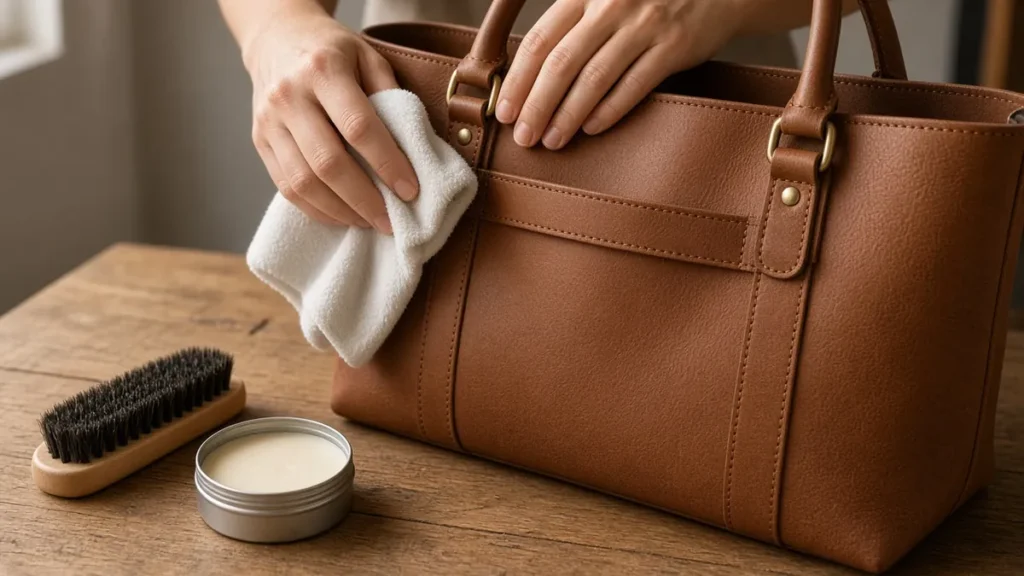
To clean a leather purse: empty it and brush out the lining, dust the outside with a dry microfiber cloth, spot-test your cleaner on a hidden area, wipe the leather in small sections with a cloth that is barely damp with a pH-balanced leather cleaner, wipe off residue, let it air-dry away from heat, then apply a thin coat of leather conditioner and buff. Clean hardware separately and treat stains on their own.
That works for most smooth, finished leather. But “leather” covers very different surfaces (suede, waxed buffalo, patent, hair-on, unfinished vegetable-tanned) and what’s safe for one can ruin another. As bag makers, a lot of the “damaged” bags we see were simply cleaned with the wrong thing. This guide walks you through identifying your leather, a safe 8-step method, stain fixes, household-product myths, and when to stop and call a professional.
The 60-second routine (most bags): Empty it. Dry-dust it. Wipe with a cloth barely dampened with leather cleaner. Dry-buff. Let it rest. Condition lightly once dry. Done.
Step 0: Identify your leather first
Check the care label, the product page, or ask the maker. If you’re unsure, treat the bag as delicate and do a spot test.
| Leather type | How to recognize it | Clean with | Avoid |
|---|---|---|---|
| Finished / pigmented smooth leather | Even color, slight sheen, water beads on it | Damp cloth, pH-balanced leather cleaner | Solvents, abrasive pads |
| Aniline / unfinished full grain, vegetable-tanned | Visible pores, darkens when touched with a wet finger | Dry cloth; minimal moisture; leather cleaner made for aniline | Soaking, soap, colored cloths |
| Pull-up, waxed or oiled (e.g., buffalo) | Lightens when bent or scratched; feels slightly waxy | Dry cloth, rub scuffs with a thumb, light conditioner | Harsh cleaners that strip oils |
| Pebbled leather | Raised, bumpy grain | Soft brush into the texture, then damp cloth | Thick creams that sit in the grooves |
| Suede / nubuck | Velvety nap, no shine | Suede brush and eraser | Water, conditioners, oils |
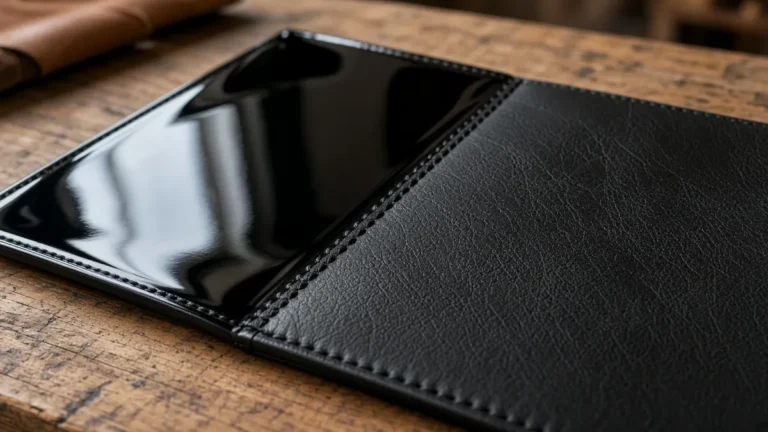
| Patent leather | Mirror gloss | Damp microfiber cloth; patent cleaner | Acetone, alcohol, regular conditioner |
| Hair-on cowhide | Hair still on the hide | Brush with the hair; damp cloth for spots | Soaking, brushing against the hair |
| Woven leather | Interlaced leather strips | Soft brush between strips, damp cloth | Over-wetting, which gets trapped |
| Waxed canvas with leather trim | Canvas body, leather handles/base | Brush, cold water sponge on canvas; condition leather only | Detergent, washing machine |
Not sure what you have? Our types of leather guide and full-grain vs top-grain leather explain the differences.
What you’ll need
- Two or three soft white microfiber cloths (white, so no dye transfers)
- A soft brush: horsehair for smooth leather, a suede brush for suede
- pH-balanced leather cleaner (or, for finished leather only, lukewarm water with a few drops of mild, dye-free soap)
- Leather conditioner, neutral or matched to the color
- Cotton swabs for spot tests and hardware
- A lint roller or a vacuum with a brush attachment for the lining
- Acid-free tissue or a clean T-shirt to stuff the bag while it dries
- Optional: cornstarch for oil stains, a suede eraser, metal polish for hardware
How to clean a leather purse: 8 steps
1. Empty it completely
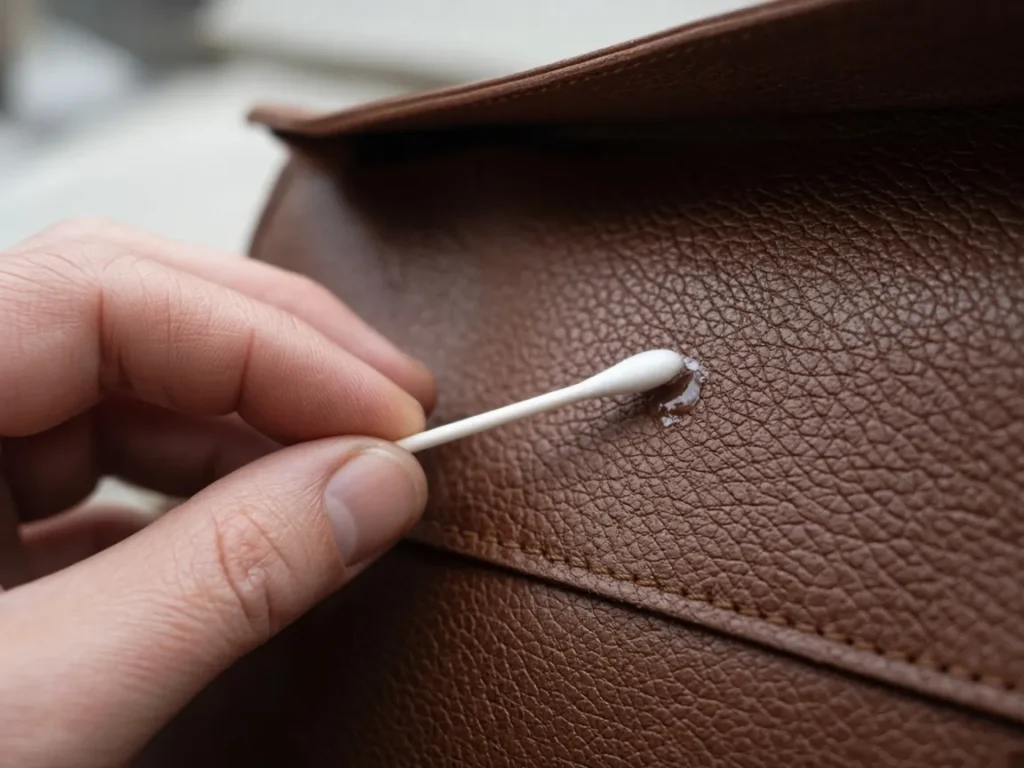
Take everything out, open every pocket and zip, and turn the bag upside down over a trash can. Give it a gentle shake. Crumbs, sand and pen leaks inside a bag cause as much damage as dirt outside.
2. Clean the lining
If the lining pulls out, turn it inside out and lint-roll or vacuum it with a brush attachment. For marks on a fabric lining, dab with a cloth dampened in water with a drop of mild soap, then blot with a dry cloth. Don’t soak it: water wicks into the leather from behind. Leave the bag open to air-dry.
3. Dust the outside
Wipe the whole bag with a dry microfiber cloth, or brush it with a soft horsehair brush. Pay attention to seams, the base corners and the area around hardware, where grit collects. Dry-dusting first stops you grinding grit into the surface when you clean.
4. Spot-test your cleaner
Choose a hidden area, such as under a flap, the base, or the inside of a strap. Apply a little cleaner with a cotton swab, wait a few minutes, and check for color on the swab, darkening or a change in sheen. If the color lifts or the leather darkens and stays dark, stop and use a gentler method (or call a professional).
5. Wipe in small sections
Apply the cleaner to the cloth, not to the bag. The cloth should be barely damp, never wet. Work in small sections with light, overlapping strokes, following the panels from top to bottom. Turn the cloth often so you’re not putting dirt back on. Spend extra time on handles and the top edge, where hand oils build up.
6. Remove residue and dry
Go over each section with a clean, dry cloth to lift leftover cleaner and moisture. Stuff the bag loosely with tissue to hold its shape and let it air-dry at room temperature for a few hours, ideally overnight. Never use a hair dryer, radiator or direct sun. Heat is what cracks leather, not water. (More in can leather get wet?)
7. Clean the hardware
Dip a cotton swab in a little metal polish (or a brass cleaner for brass) and work it onto buckles, feet, zips and clasps. Keep it off the leather; mask the surrounding leather with your finger or a piece of card. Buff with a clean cloth. Solid brass naturally darkens over time; you can polish it bright or leave the patina. Plated hardware should only be wiped, as polish can wear through the plating.
8. Condition
Once the bag is fully dry, apply a thin layer of conditioner with a clean cloth, in small circles, over the whole bag including the base and the underside of straps. Let it absorb for 15 to 20 minutes, then buff off the excess. Thin coats are better than thick ones; over-conditioning makes leather soft, sticky and prone to losing shape. Skip this step for suede, nubuck and patent.
The spots most guides miss
Handles and the top edge. These carry hand oils, lotion and sunscreen, so they darken first. Wipe them every time you clean, with a little more attention than the panels. If a handle has gone dark and slightly sticky, a leather cleaner on a cloth (two or three light passes, drying between) usually lifts the buildup. On pull-up and oiled leathers, some darkening at the handles is patina and can’t (and shouldn’t) be removed.
Edges. Burnished edges (sanded and polished smooth) just need a dry wipe and, now and then, a tiny amount of conditioner. Painted edges should only be wiped with a damp cloth; cleaners and rubbing can lift the paint. Cracked edge paint is a repair job, not a cleaning job.
Monograms and embossing. Dirt settles in pressed initials. Brush them with a soft, dry toothbrush before you wipe. On foil (gold or silver) monograms, wipe gently around the letters and avoid cleaners on the foil itself, which can dull it.
The base and corners. These touch floors, café tables and car footwells. Brush and wipe them every time, and check corners for scuffs that can be buffed with a little conditioner.
Under the flap and inside the straps. Often skipped, but they rub against clothing and pick up dye and sweat.
How to keep a leather bag clean longer
- Put it down on something. A chair or a hook, not the floor.
- Watch the denim. Raw and dark new jeans transfer dye onto pale bags; wash new jeans a few times first or carry a darker bag.
- Contain the culprits. Pens with caps, makeup in a pouch, lotions in a zipped bag.
- Hands first. Let hand cream and sunscreen sink in before you pick up a light bag.
- Dust it when you put it away. Thirty seconds with a dry cloth prevents most buildup.
- Store it properly. Stuffed, in a cotton dust bag, upright on a shelf, away from heat and light.
How often should you clean a leather bag?
| How often | What to do |
|---|---|
| Weekly (if you think of it) | Dry-dust or brush; empty crumbs |
| Monthly, or when it looks dull | Light wipe with a barely damp cloth |
| Every 3 to 6 months | Full clean (steps 1–7) |
| Two or three times a year | Condition smooth leather |
| Immediately | Spills, ink, oil, rain |
Bags used daily in a city, or in light colors, need cleaning more often than a dark bag used occasionally. Our general routine for caring for leather bags lays out the long-term schedule.
How to remove common stains
Always blot fresh spills; never rub. Then:
| Stain | What to do | Don’t |
|---|---|---|
| Water spots | Blot. If a ring forms as it dries, dampen the whole panel evenly with a barely wet cloth, edge to edge, so it dries uniformly | Spot-dry with heat |
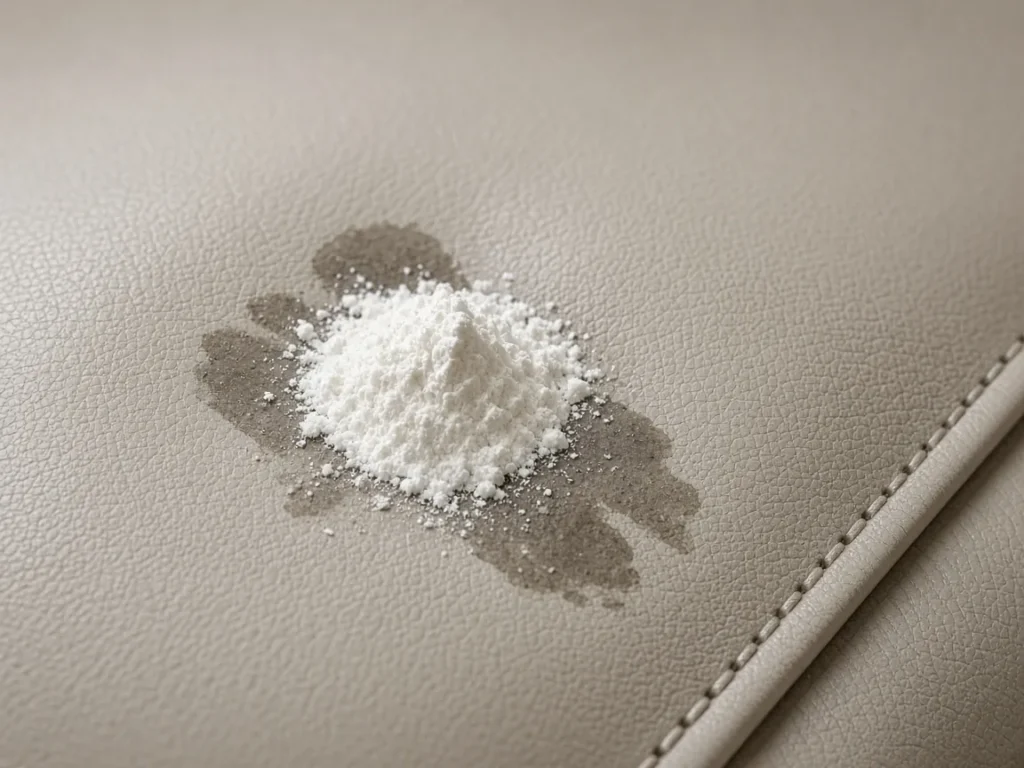
| Oil or grease (lotion, food) | Cover with cornstarch, leave overnight, brush off; repeat if needed | Add water; it spreads the oil |
| Ink | Act immediately: blot. On finished leather, use an ink remover made for leather, tested first. On unfinished leather, see a professional | Rubbing alcohol or hairspray, which can strip color and leave a pale patch |
| Makeup | Lift powder with a soft brush; wipe cream makeup with leather cleaner on a cloth | Makeup wipes (they contain oils and solvents) |
| Food and drink | Blot, then wipe with leather cleaner on a damp cloth | Sugary residue left to dry |
| Mud | Let it dry, brush it off, then wipe with a damp cloth | Wiping wet mud into the grain |
| Salt lines (winter roads) | Wipe with a cloth barely dampened in a 50/50 mix of water and white vinegar, then condition once dry | Leaving salt to dry the leather out |
| Dye transfer from jeans | Leather cleaner on a cloth, gentle passes; repeat | Scrubbing; pros have stronger options for light leather |
| Mold or mildew | Take the bag outside, brush off spores, wipe with a cloth dampened in a 50/50 water and white vinegar mix (spot test first), dry fully, condition | Storing it back in a damp place or plastic |
Deep, set-in stains on pale or unfinished leather are often permanent. A professional leather cleaner has stronger tools and can sometimes recolor, so it’s worth asking before you try anything aggressive.
Household products: what’s safe and what isn’t
| Product | Verdict | Why |
|---|---|---|
| Mild, dye-free dish soap (a few drops in water) | OK on finished leather, sparingly | Cleans without heavy chemicals; wring the cloth out well and avoid lots of suds |
| Baby wipes | Avoid | Contain cleansers, oils and fragrance that can strip finishes or leave residue |
| White vinegar | Diluted 50/50, for salt and mildew only | Acidic; spot-test, then condition afterward |
| Olive oil, coconut oil | Avoid | Can go rancid, darken leather unevenly and attract dirt |
| Rubbing alcohol, nail polish remover | Avoid | Strip dye and finishes, dry leather out |
| Magic eraser (melamine sponge) | Avoid on leather | It’s an abrasive and removes the finish |
| Saddle soap | Only for heavy-duty or work leather | Too harsh for most finished handbags |
| Silicone sprays | Avoid | Seal the surface, can darken leather and block conditioning later |
| Cornstarch or talc | OK for oil and grease | Absorbs oil without moisture |
| Petroleum jelly | Patent leather only, sparingly | Buffs scuffs on gloss; leaves residue on regular leather |
Cleaning different leathers
Suede and nubuck. Brush with a suede brush in one direction to lift dirt, then back and forth to restore the nap. Rub marks with a suede eraser (a clean pencil eraser works in a pinch). Let water spots dry, then brush. Use a suede protector spray on clean, dry suede. Never use conditioner or creams. Our suede bags are bound in smooth leather at the edges; condition only that trim.
Pull-up and waxed leathers (like buffalo). These are designed to lighten where they bend and darken back with handling. Most scuffs disappear if you rub them firmly with your thumb to warm the waxes. Wipe dry, and condition about once a year. Avoid strong cleaners that remove the oils. See our buffalo leather bags for what this finish looks like.
Pebbled leather. Brush first so dirt comes out of the valleys, then wipe. Use thin conditioner, buffed well, so it doesn’t sit in the grooves. More in what is pebbled leather?
Patent leather. Damp cloth, dry buff, a patent-specific product for scuffs. No regular conditioner. Full method in what is patent leather?
Hair-on cowhide. Brush gently in the direction the hair lies. For spots, dab with a cloth barely damp with water and mild soap, then blot and let it dry. Never soak it or brush against the hair. See our hair-on hide bags.
Light-colored leather (cream, oat, white). Clean more often and more gently; dirt is easier to lift before it settles. Keep new dark denim and printed bags away from it, since dye transfer is the most common problem.
Waxed canvas with leather trim. Brush off dry dirt and sponge marks with cold water. Never use detergent or a washing machine. When water stops beading, re-wax the canvas. Condition only the leather parts. See our waxed canvas bags.
Nappa and lambskin. Very soft and delicate; minimal moisture, a cleaner made for delicate leather, and a light touch. More in what is nappa leather?
PU or “vegan” leather. Damp cloth with mild soap, then dry. No conditioner. See PU leather vs real leather.
Mistakes that ruin leather bags
- Soaking or spraying the bag directly. Always put product on the cloth.
- Drying with heat. Hair dryers and radiators cause cracking and shrinkage.
- Using colored cloths or paper towels. Dye can transfer; paper can shred and scratch.
- Over-conditioning. More isn’t better. Two or three thin coats a year is plenty.
- Skipping the spot test. Especially on aniline, pale or vintage leather.
- Storing it dirty or damp. Grit abrades, and moisture breeds mold.
- Storing it in plastic. It traps moisture. Use a cotton dust bag.
When to see a professional
Take it to a leather specialist or cobbler if you see:
- Ink or dye stains on unfinished or light leather
- Color loss or patchy fading you want matched
- Cracks, peeling finish or flaking edges
- Mold that has come back after cleaning
- Broken stitching, a loose handle or a stuck zip
- A designer or vintage bag where a mistake would be costly
Stitching and hardware problems are often covered by the maker. Ours are: see our warranty.
Packing a bag for a trip? Our guide to the best travel handbags covers what survives airports best. For more on materials, finishes and care, browse the Leather Guide.
Frequently asked questions
Can I clean a leather purse with dish soap?
On finished smooth leather, yes, sparingly: a few drops of mild, dye-free dish soap in lukewarm water, applied with a well-wrung cloth, then wiped off with a clean damp cloth and dried. Don’t use it on suede, nubuck or unfinished leather, and condition afterward.
Can you use baby wipes on a leather purse?
It’s best not to. Baby wipes contain cleansers, oils and fragrance that can strip leather finishes or leave a residue that attracts dirt. A cloth barely dampened with water or a proper leather cleaner is safer.
How do you clean the inside of a purse?
Empty it, turn the lining out if possible, and lint-roll or vacuum it. Dab marks with a cloth dampened in water with a drop of mild soap, blot dry, and leave the bag open to air-dry. Don’t soak the lining, as water wicks into the leather.
How do you get stains out of a leather purse?
Blot fresh spills immediately. Use cornstarch overnight for oil and grease, a leather cleaner on a damp cloth for food and makeup, and an ink remover made for leather on finished surfaces. For ink on unfinished or light leather, see a professional.
Can you use vinegar to clean leather?
Only diluted (50/50 with water) and only for salt lines or mildew, after a spot test. Vinegar is acidic and drying, so condition the leather once it’s dry. Don’t use it as an everyday cleaner.
How do you clean a white leather purse?
Clean it little and often with a pH-balanced leather cleaner on a white cloth, keep it away from dark denim and printed bags, and store it in a dust bag away from sunlight. Treat dye-transfer marks quickly, as they’re harder to remove once set.
How often should you clean a leather bag?
Dust it weekly, give it a light wipe monthly, do a full clean every three to six months, and condition two or three times a year. Treat spills, ink and rain immediately.
Should you condition a leather bag after cleaning?
Yes, for smooth leather, once it’s fully dry. Cleaning removes some oils, and a thin coat of conditioner replaces them. Don’t condition suede, nubuck or patent leather.
Can you put a leather bag in the washing machine?
No. Soaking, tumbling and heat will distort, stiffen and possibly crack leather, and can ruin linings, stiffeners and hardware. Always clean leather by hand.
How do you clean a suede purse?
Use a suede brush to lift dirt and restore the nap, a suede eraser for marks, and let any water spots dry before brushing. Avoid water-based cleaning, oils and conditioners, and protect clean suede with a suede protector spray.