What Is Leather Patina? Why Your Tote Bag Is Turning Brown (and What to Do)
If your tan or cognac leather tote is turning brown, it's almost certainly patina, the natural darkening and sheen that good leather develops with light and handling. This guide explains what causes it, how to tell patina from damage, how long it takes, and how to speed it up, slow it down or even it out.
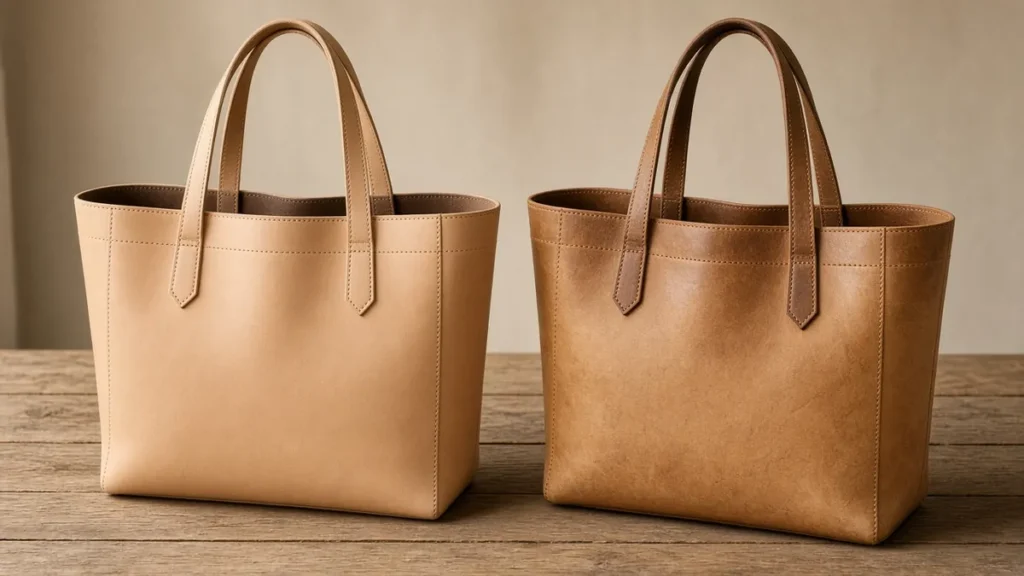
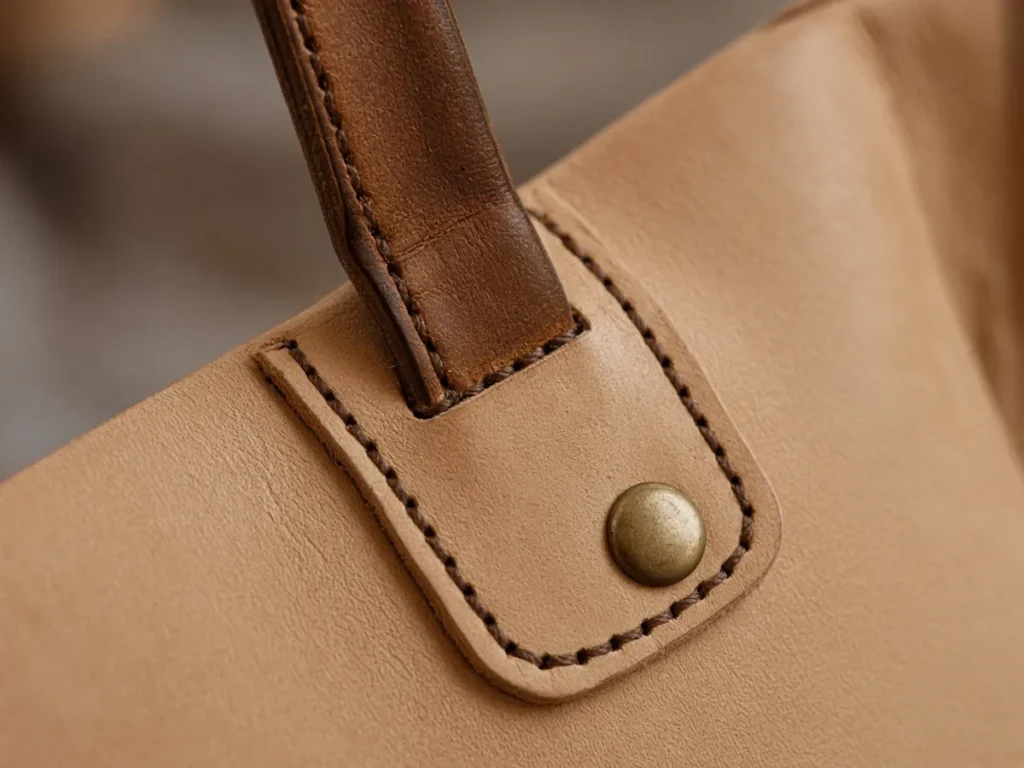
If your leather tote bag is turning brown, especially on the handles, the top edge and the side that rests against you, it’s almost certainly patina: the natural darkening, softening and sheen that good leather develops as it’s exposed to light, air, the oils on your hands and everyday friction. It’s strongest on light, lightly finished leathers such as tan and cognac aniline or vegetable-tanned leather, and it’s a sign of real leather, not a fault. Patina is even, gradual and glossy; damage (stains, water rings, dryness, mould or colour transfer) is patchy, sudden or rough. Both can be managed.
This guide explains what causes patina, which leathers develop it, how fast it happens, how to tell it from damage, and how to speed it up, slow it down or even it out. If your tote is canvas and turning brown, there’s a section on that too.
Disclosure: We make leather bags, and we describe how our own leathers age where it’s useful, based on our product descriptions (as listed in October 2026). The causes and care advice apply to any leather bag.
What is leather patina?
Patina is the change in colour and surface that leather develops with age and use. On leather, it shows up as:
- Darkening, especially on light colours (tan turns honey, then a warm mid-brown).
- A soft sheen, where friction has polished the surface.
- Softening, as the fibres flex and relax.
- Character marks: small scratches and creases that blend in rather than standing out.
The word comes from the green-brown film that forms on bronze and copper. In both cases it describes a surface that has been changed by time in a way people value. Furniture makers and leather workers use it to mean a finish you can’t fake quickly.
Why your tote bag is turning brown: the five causes
| Cause | What happens | Where you see it |
|---|---|---|
| Light (UV) | Sunlight and daylight darken tannins and dyes in the leather | The side that faces out; the front panel |
| Hand oils | Natural oils from your skin soak into the leather | Handles, top edge, zip pulls |
| Friction | Rubbing burnishes and polishes the surface | Handles, corners, the side against your body |
| Air (oxidation) | Exposure slowly deepens the tannins and oils | Everywhere, slowly |
| Moisture and conditioners | Water and oils darken leather temporarily or permanently | Wherever it’s been wet or conditioned |
1. Light
Sunlight is the fastest driver of patina. Ultraviolet light reacts with the tannins (in vegetable-tanned leather) and with the natural oils and dyes in the hide, darkening them. That’s why the front of a tan tote can be darker than the back after a summer.
2. Oils from your hands
Every time you carry your tote, a tiny amount of skin oil transfers to the leather. Over months, the handles and top edge darken and develop a shine. This is why the handles usually patina first and most.
3. Friction
Rubbing against your body, your coat and the inside of your arm burnishes the leather, compressing the surface fibres and creating a sheen.
4. Air
Oxidation is slow but constant. Even a bag kept in a drawer will darken a little over years.
5. Moisture and conditioners
Water darkens leather while it’s wet; on lightly finished leathers, the darker shade can partly stay. Leather conditioners and oils also darken most light leathers, usually by a shade.
Which leathers develop a patina?
| Leather | Patina | Notes |
|---|---|---|
| Vegetable-tanned, light colour | Strongest | Tan “natural” leather can go from pale to deep honey |
| Aniline (dyed through, no coat) | Strong | Darkens and shines where handled |
| Pull-up / oiled / “crazy horse” | Strong, changing | Lightens where flexed, darkens with handling |
| Semi-aniline | Moderate | Thin coat slows it down |
| Chrome-tanned, aniline | Mild to moderate | Softer leathers change less in colour |
| Suede and nubuck | Nap darkens and flattens | Not a sheen; a burnished, darker nap |
| Pigmented / coated | Very little | The paint layer blocks light and oils |
| Saffiano, patent, heavily embossed | Very little | Coated surfaces |
| PU / “vegan leather” | None | Plastic cracks and peels instead |
So if your bag is darkening, it’s a good sign that it’s real leather with a light finish. Learn more about leather types in our guide to the best leather for bags, and about veg-tanned leather on our vegetable tanned leather bags page.
How colour affects patina
| Colour | How much it changes |
|---|---|
| Natural / pale tan | The most: pale to honey to mid-brown |
| Tan | A lot: towards honey in the first year |
| Cognac | Noticeable: a shade or two deeper; richer red-brown |
| Chestnut | Moderate |
| Chocolate / dark brown | Slowly; gains depth and shine more than colour |
| Oxblood, olive, navy | Slowly; darker and glossier |
| Black | Little colour change; gains a sheen |
| Oat / stone / cream | Darkens and picks up marks; can look uneven |
On our own product pages, we describe tan leather as darkening noticeably towards honey with sun and handling; cognac as deepening about half a shade to a shade or two in the first year, most where your hand goes; chocolate as darkening slowly; and our buffalo leather as lightening at every fold and darkening back with handling. On our canvas-and-leather bags, the tan leather trim darkens to honey within the first year.
How long does leather patina take?
| Time | Typical change (tan or cognac aniline leather, daily use) |
|---|---|
| First weeks | Handles slightly darker; surface less matte |
| 3 months | Handles and top edge visibly darker; light sheen |
| 6 months | Overall shade deeper; front darker than back if sunlit |
| 1 year | Clearly honey or deeper; even sheen; scratches blended |
| 2–3 years | Rich mid-brown; soft, supple; deep glow at handles |
| 5+ years | Settled colour; changes slowly after this |

Daily use, sunny climates and outdoor time speed it up. Occasional use and storage in a dust bag slow it down.
Patina or damage? How to tell
| Sign | Patina | Damage |
|---|---|---|
| Darkening | Gradual, even, deepest at handles and edges | Sudden; blotchy; sharp-edged |
| Shine | Soft, natural sheen | Greasy, sticky or tacky patches |
| Scratches | Blend in, fade with handling | Deep gouges through the surface; flaking |
| Texture | Softer, supple | Dry, stiff, cracking |
| Edges of a mark | Soft, blended | Clear rings or tide lines |
| Smell | Leather | Musty (mould) or chemical |
| Colour transfer | No | Blue tint from denim; dye rubbing onto clothes |
Common types of damage that look like “turning brown”
- Water marks. A dark ring or tide line after rain or a spill. Often fades as the leather dries and ages; see below.
- Oil and grease stains. A dark, spreading patch from food, lotion or hand cream.
- Dirt. Grey-brown grime, worst in the grain and creases. Wipes off with a damp cloth.
- Mould. White or green fuzz with a musty smell, after storage in damp conditions.
- Dryness. Lighter, rough, sometimes cracking areas.
- Denim transfer. A bluish tint on the back of pale bags.
How to speed up patina
If you love the aged look and want it sooner:
- Use it daily. Handling is the most natural way.
- Give it sunlight. A few hours in indirect or gentle direct sun, turning the bag so it darkens evenly. Don’t leave it in hot sun for days; it can dry the leather.
- Condition it lightly. A thin coat of leather balm or neatsfoot oil darkens most light leathers by a shade. Test on a hidden area first.
- Rub it. Buffing with a soft cloth or your hand burnishes the surface.
- Carry it outdoors. Fresh air and light do the work.
Avoid shortcuts like heavy oiling (it can leave the leather greasy and blotchy) or heat guns (they dry and crack the surface).
How to slow down patina, or keep it even
- Store it in a cotton dust bag, out of direct light.
- Rotate it with other bags.
- Keep your hands clean and avoid hand cream just before carrying it.
- Use a light leather protector recommended for the leather type (test first; some darken leather).
- Avoid sunlight on one side. If it sits by a window or on a car seat, turn it regularly.
- Choose a darker colour next time. Chocolate and black change least.
Fixing uneven patina
Uneven patina usually comes from one side getting more sun or handling than the other.
- Sun the lighter side for a few hours at a time, checking often.
- Condition the whole bag evenly, which narrows the difference.
- Wait. Over months, the lighter areas usually catch up.
- For a stubborn water mark, dampen the whole panel evenly with a damp cloth, edge to edge, and let it dry slowly away from heat. This blends the mark into the panel.
- For a grease spot, blot, then leave it; on many leathers it slowly wicks into the surrounding leather. Talc or cornflour on fresh oil can help draw it out.
Why is my canvas tote bag turning brown?
If your tote is cotton canvas (or canvas with leather trim) and the fabric itself is turning brown or yellow, it isn’t patina in the same sense:
| Cause | Looks like | What to do |
|---|---|---|
| Dirt and body oils | Grey-brown at handles and base | Spot clean with mild soap; brush when dry |
| Oxidation of cotton or old stains | Overall yellowing or brown spots | Gentle wash if the label allows; oxygen bleach on undyed canvas |
| Mildew | Brown or black speckles, musty smell | Dry fully in sun; clean; store dry |
| Rust from hardware | Orange-brown marks near rivets | Rust remover suited to fabric; replace plated hardware |
| Waxed canvas ageing | Darker creases, deeper colour | Normal; rewax once a year |
| Leather trim dye | Brown near the leather edges after rain | Prevent by drying slowly; hard to remove |
On a canvas tote with leather trim, the leather handles and base darkening to honey is normal patina; the canvas getting dirty is not, and can be cleaned.
Caring for leather while it patinas
- Wipe weekly with a dry or slightly damp cloth.
- Condition two or three times a year (more in dry climates), thinly.
- Dry wet leather slowly, away from radiators and hair dryers. See can leather get wet?.
- Clean marks early. See how to clean a leather bag.
- Brush suede; its “patina” is a darker, flatter nap where it’s handled.
- Store stuffed and upright in a dust bag. Read our full guide to caring for leather bags.
Patina and value
Many people buy natural, tan and cognac leather bags precisely because they patina. A well-aged full-grain bag looks personal in a way a new one can’t, and patina hides small scratches by blending them into the surface. The same is true of distressed leather bags, which start with some of that character built in. Coated leathers and plastics, by contrast, look their best on day one and then wear, chip or peel.
Leather bags that develop a good patina
If you want a bag that will darken and mellow, choose a light or mid colour in full grain. A few of ours:
- Alnwick boat tote in tan: open-top tote in three sizes (12 to 18 inches wide), riveted handles. From $155.
- Marlow tote in cognac: magnetic-tab tote for a 13- or 15-inch laptop. From $185.
- Lorne work tote in cognac: aniline-dyed, two-way brass zip, padded laptop sleeve. From $199.
- Rydal satchel in tan: twin-buckle satchel, 12.5 × 9 × 3.25 in. $205.
- Grasmere buffalo tote in tan: pull-up buffalo that lightens at folds and darkens back. $215.
- Ellis canvas and leather tote: canvas body with full-grain leather handles and trim that darken with use. From $135.
All are made to order with solid, unplated brass hardware, which also mellows from bright to a soft gold. Stitching is covered for life and hardware for five years.
Browse brown leather tote bags and full-grain leather bags.
Browse more guides in the Leather Guide.
Bags mentioned in this guide
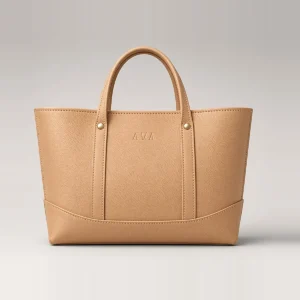 The Alnwick — Tan Leather Boat Tote Price range: $155.00 through $195.00View the bag
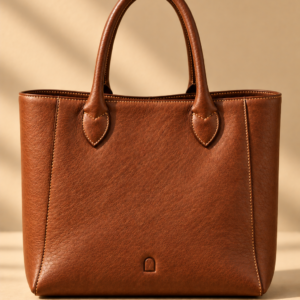 The Marlow — Cognac Leather Tote Bag Price range: $185.00 through $209.00View the bag
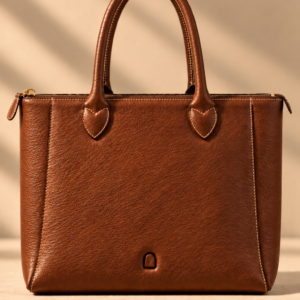 The Lorne — Cognac Leather Work Tote with Zip Price range: $199.00 through $225.00View the bag
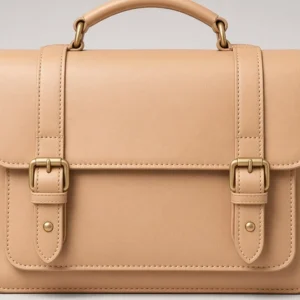 The Rydal — Tan Leather Satchel$205.00View the bag
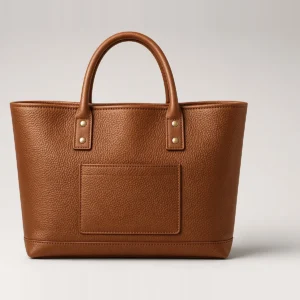 The Grasmere — Tan Buffalo Leather Tote Bag$215.00View the bag
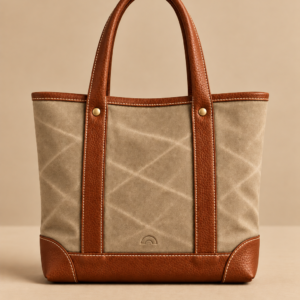 The Ellis — Waxed Canvas & Leather Tote, Sand & Cognac Price range: $135.00 through $159.00View the bag
Frequently asked questions
Why is my leather tote bag turning brown?
Most likely patina. Light, the oils from your hands, friction and air darken lightly finished leather over time, starting at the handles and top edge. It’s normal and a sign of real leather.
Is leather patina good or bad?
Good, in most cases. Patina is even, gradual and glossy, and many people value it. Patchy marks, rings, stiffness or a musty smell are damage, not patina.
How long does it take leather to patina?
Visible change usually starts within weeks at the handles. With daily use, tan or cognac leather is clearly darker after about a year, and keeps deepening for several years.
Can you stop leather from darkening?
You can slow it by storing the bag out of light, keeping hands clean, rotating bags and using a suitable protector. You can’t stop natural leather from changing completely.
Does all leather develop a patina?
No. Vegetable-tanned, aniline and pull-up leathers patina the most. Coated, saffiano, patent and PU materials change very little.
How can I make leather patina faster?
Carry it daily, give it gentle sunlight while turning it evenly, condition it lightly and buff it with a soft cloth. Avoid heavy oiling and heat.
How do I fix uneven patina on a leather bag?
Sun the lighter areas, condition the whole bag evenly and give it time. For water marks, dampen the whole panel evenly and let it dry slowly.
Why is my canvas tote turning brown?
Usually dirt and body oils, mildew from damp storage, or rust from hardware. Spot clean, dry it fully and store it dry. Leather trim darkening is normal patina.