Soft vs Structured Leather Bags: How They’re Made, How They Carry, Which Suits You
Soft and structured leather bags differ in how they are built, not just how they look: leather temper, lining, stiffeners and the base. This guide explains the construction, compares weight, comfort, organization and aging with real numbers, and helps you choose.
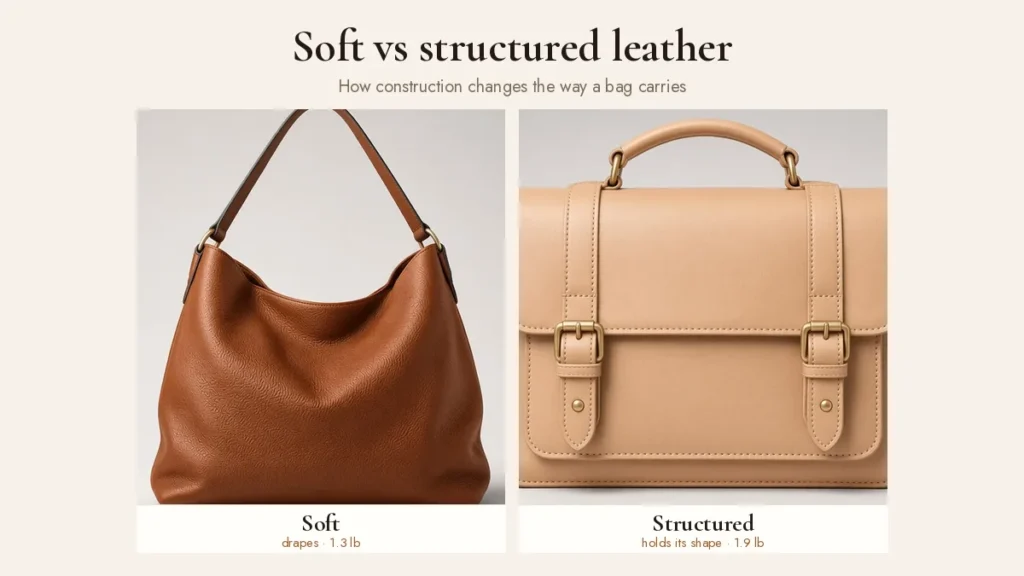
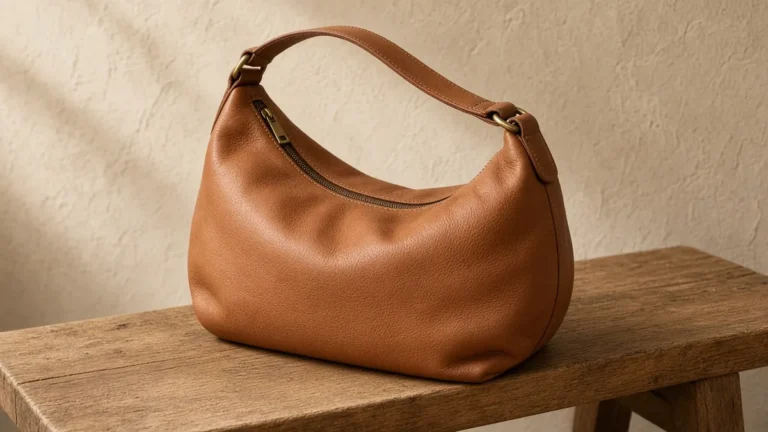
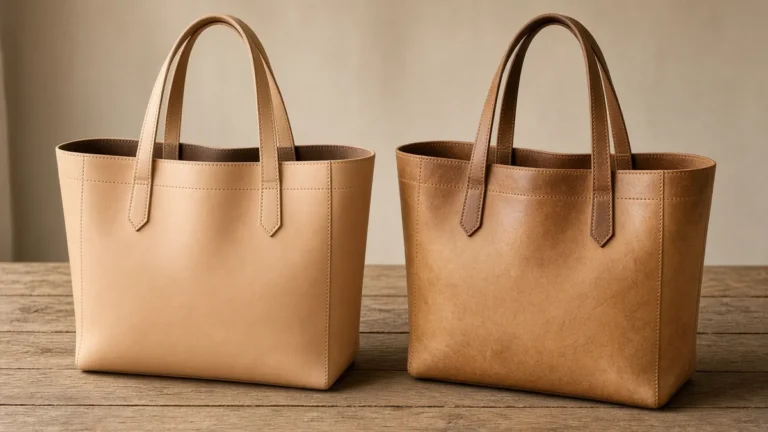
A structured leather bag is built to hold its shape: firmer leather, a stiffened lining, a separate base panel and often piped edges, so it stands up empty and keeps its outline full or not. A soft leather bag uses supple, often milled leather with little or no stiffening, so it drapes, molds to your body and folds when you put it down. Choose structured for work, formal days, laptops and tidy organization; choose soft for comfort, light weight and a relaxed look. Many of the best everyday bags sit in between: a firm base with soft walls.
This guide looks at the leather and construction behind each, not just the silhouette. (For specific soft shapes, see hobo vs bucket vs slouchy bag.)
Disclosure: We are a leather bag workshop and the product boxes show our own bags, with prices as listed in November 2026. The construction notes apply to any brand.
Soft vs structured at a glance
| Soft | Structured | |
|---|---|---|
| Stands up empty | No | Yes |
| Leather | Supple, often milled or tumbled; suede | Firmer, smooth or lightly grained |
| Lining | None, or a thin cotton lining | Lining backed with a stiffener |
| Base | Same panel as the body, or lightly reinforced | Separate firm base panel, sometimes with feet |
| Weight for its size | Lighter | Heavier |
| Comfort against the body | High; molds to you | Lower; corners and edges press |
| Organization | Harder; things sink | Easier; pockets stay in place |
| Protects contents | Less | More (laptops, tablets, papers) |
| Look | Relaxed, casual to smart | Polished, smart to formal |
| How it ages | Softens further and slouches more | Keeps shape; corners and edges wear first |
| Typical styles | Hobo, slouchy shoulder bag, soft tote | Satchel, work tote, top-handle bag, briefcase |
What makes a leather bag soft or structured?
Four things decide how a bag behaves. Knowing them helps you read product pages.
1. The leather itself
- Temper: leather can be finished firm or soft. Firm leather holds a crease line and a flat panel; soft leather drapes.
- Thickness: thicker leather is stiffer, but a soft bag can still be thick if the leather is milled.
- Milling and tumbling: tumbling leather in a drum softens the fibers and raises a pebble grain. Milled leather is the classic slouchy-bag leather.
- Suede and nubuck are naturally soft and almost always used for unstructured bags. Color matters less than construction here, though a soft bag in brown shows its patina sooner; see brown vs black leather bag.
2. The lining and stiffeners
Structured bags usually have a lining backed with a stiffener (an interfacing glued or stitched behind the leather). Soft bags have a thin cotton lining or none at all; an unlined bag shows the raw suede side of the hide inside and is the lightest and softest construction.
3. The base
A separate, reinforced base panel is the biggest single difference. It lets a bag stand, spreads the weight of a laptop and protects the corners. Some structured bags add metal feet. Soft bags often have no separate base, so they fold flat.
4. Edges and seams
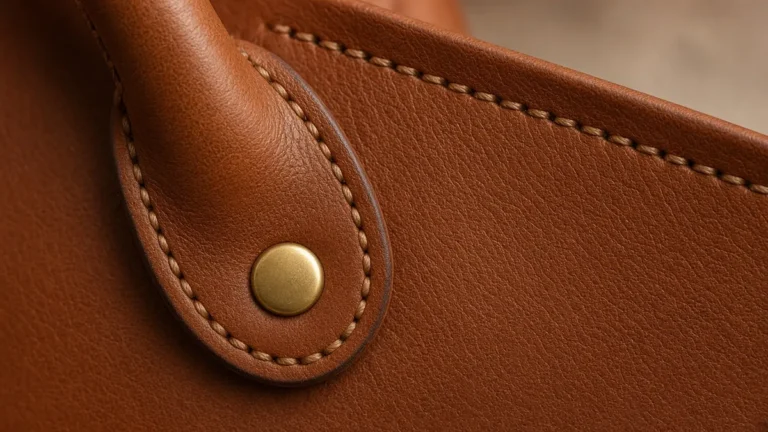
Structured bags often have piped or welted seams, a cord sewn into the edge that holds a sharp line. Soft bags use simple turned or bound seams that let the panels move.
The weight difference, measured
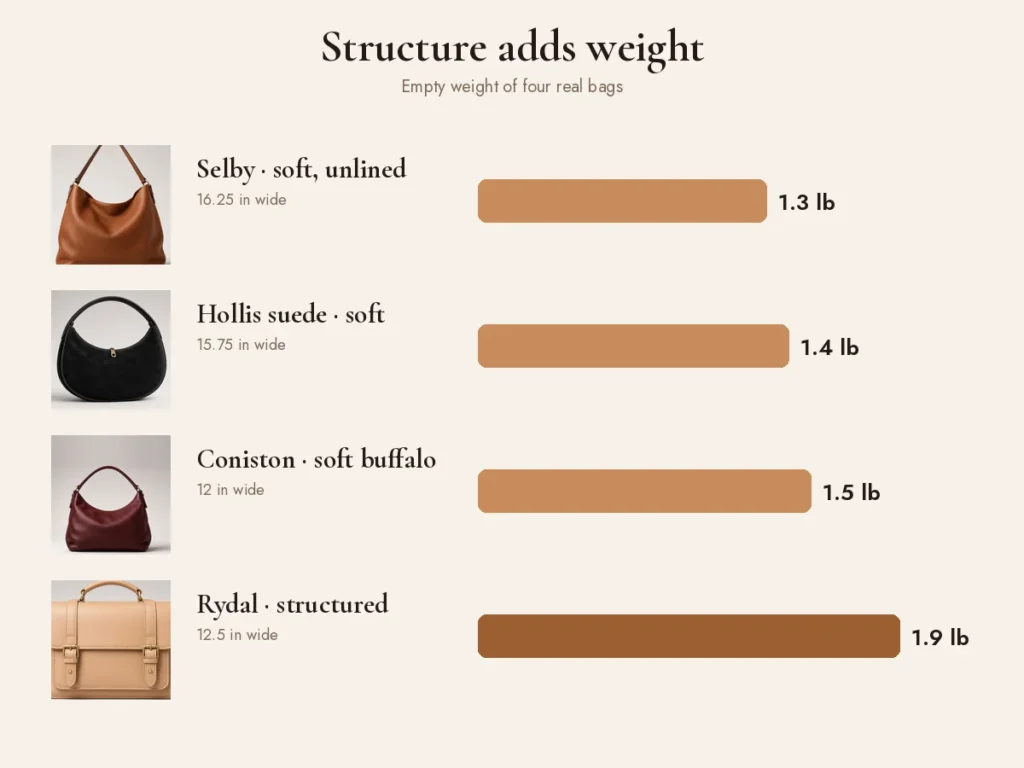
Structure costs weight. Here are bags measured the same way:
| Bag | Construction | Size (W × H × D) | Empty weight |
|---|---|---|---|
| Slouchy shoulder bag (Selby) | Soft, milled pebbled leather, unlined | 16.25 × 11 × 4.25 in | 1.3 lb |
| Hobo (Hollis, suede) | Soft suede, cotton lining | 15.75 × 11.75 × 4.75 in | 1.4 lb |
| Shoulder purse (Coniston) | Soft, slouched buffalo leather, cotton lining | 12 × 8.75 × 4 in | 1.5 lb |
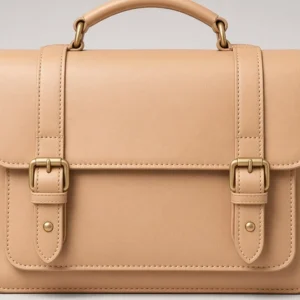
| Satchel (Rydal) | Structured, flap with twin buckles | 12.5 × 9 × 3.25 in | 1.9 lb |
The structured satchel is smaller than every soft bag here and still the heaviest, about half a pound more than the much larger Selby. If you carry your bag all day on one shoulder, that matters.


How each one carries
Comfort. A soft bag shapes itself to your hip and ribs, so there are no corners pressing into you. A structured bag keeps its corners, which is fine in the hand or under the arm, but can dig in on a long walk.
Organization. A structured bag keeps pockets upright and contents visible; you can see everything when you open it. In a soft bag, things slide to the lowest point. One inside zip pocket and two small pouches solve most of it; see what to keep in your everyday bag for a pouch system.
Protection. A laptop, a tablet or papers you can’t crease belong in a structured bag with a firm base, or in a soft bag with a padded sleeve.
Access. A soft bag usually has a wider opening and is quicker to rummage in. A structured bag with a flap or buckles is slower to open but more secure.
Capacity. A soft bag holds more than its outline suggests because the body expands. A structured bag holds exactly its box and no more.
Which suits you?
| You… | Choose |
|---|---|
| Carry a laptop or tablet daily | Structured, or soft with a padded sleeve |
| Work in a formal office | Structured |
| Walk or commute a long way | Soft |
| Want the lightest bag | Soft, ideally unlined |
| Like everything in its place | Structured |
| Carry different things every day | Soft |
| Put your bag on a desk or table | Structured (it stands up) |
| Wear a lot of knitwear and denim | Soft |
| Want one bag for everything | Semi-structured |
For work specifically, the long-running question of a soft slouchy bag vs a structured tote comes down to the laptop: if you carry one, the structured tote wins; if you don’t, a soft bag in smooth leather looks smart enough for most offices.
Semi-structured: the middle option
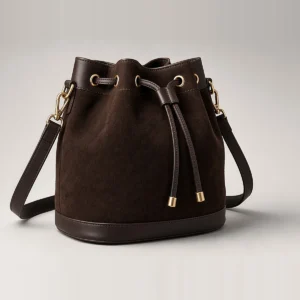
Semi-structured bags combine a firm base or frame with softer walls. They stand up and keep a clean outline, but they are lighter than fully structured bags and more comfortable against the body. Bucket bags with a flat oval or round base and a lined body, and totes with a base panel but no stiffener behind the lining, all sit here. A flat base also means a water bottle stands upright. For many people, a semi-structured shoulder bag is the best single everyday bag.
How each one ages
Soft bags get softer. Milled leather and suede relax with use, so a soft bag slouches a little more each year. That’s part of the appeal, but an overfilled soft bag can stretch at the strap points. Read does leather stretch? for what to expect.
Structured bags keep their shape for years if they are stored properly. Their weak points are corners, base edges and the fold line of a flap, which show wear first. Smooth leather on a structured bag also shows scratches more, which buff out on full-grain leather. Our guide to best leather for bags compares how different leathers wear, and full-grain vs top-grain leather explains the grades.
How to tell from a product page
You can’t squeeze a bag online, so look for these clues:
- Weight relative to size. A large bag under about 1.5 lb is almost certainly soft; a medium bag near 2 lb is structured.
- Words in the description: “milled,” “tumbled,” “slouchy,” “unlined” and “drapes” mean soft; “structured,” “holds its shape,” “base panel,” “feet” and “piped edges” mean firm.
- Photos of the bag empty. A structured bag looks the same empty; a soft bag folds or leans.
- The closure. Buckled flaps and frame tops usually go with structure; magnetic snaps and wide zips with soft bags.
Keeping each in shape
- Soft bags: don’t overfill, don’t hang them from the strap for long, and stuff them loosely with tissue when you store them.
- Structured bags: store upright on the base with light stuffing, keep the flap closed, and avoid stacking anything on top.
Full steps are in how to store a leather bag. Browse our slouchy leather shoulder bags and leather satchels. Every bag is made to order and dispatched in 5 to 7 working days.
Frequently asked questions
What is the difference between a soft and a structured leather bag?
A structured bag uses firmer leather, a stiffened lining and a separate base so it holds its shape empty. A soft bag uses supple leather with little or no stiffening, so it drapes and folds.
Are structured bags better quality?
No. Structure is a construction choice, not a mark of quality. A soft bag in good full-grain leather with strong stitching will outlast a structured bag made of coated split leather.
Which is better for work, a soft or a structured bag?
Structured, if you carry a laptop or papers or work in a formal office. If you don’t carry a laptop, a soft bag in smooth leather looks polished enough for most workplaces.
Are soft leather bags heavier or lighter?
Lighter for their size. A soft slouchy bag about 16 inches wide can weigh 1.3 lb, while a structured satchel about 12.5 inches wide weighs about 1.9 lb.
What is a semi-structured bag?
A bag with a firm base or frame and softer walls. It stands up and looks tidy but is lighter and more comfortable than a fully structured bag.
Will a soft leather bag lose its shape?
It will soften and slouch more over time, which is part of its character. Avoid overfilling it and store it stuffed with tissue to keep it from creasing.
How do I keep a structured bag from sagging?
Store it upright on its base with light tissue inside, keep heavy items out of it in storage, and don’t hang it from its handles for long periods.