Hobo vs Bucket vs Slouchy Bag: How to Tell Them Apart and Which to Carry
Hobo, bucket and slouchy bags are all soft, relaxed shoulder bags, so they get mixed up. This guide shows the one feature that defines each, compares them with real measurements, and tells you which one fits the way you carry.

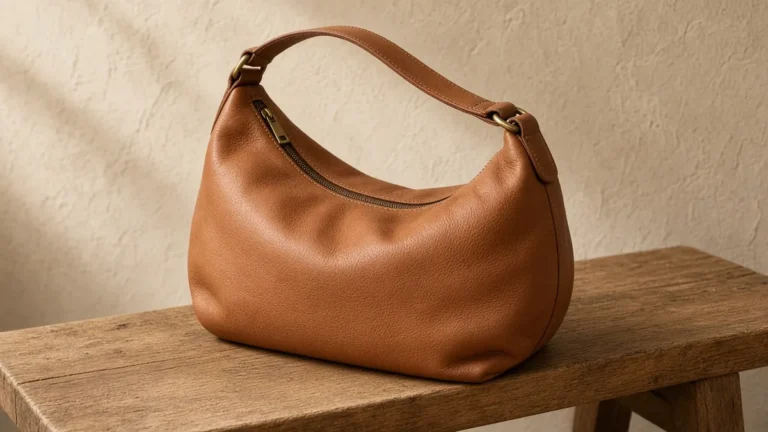
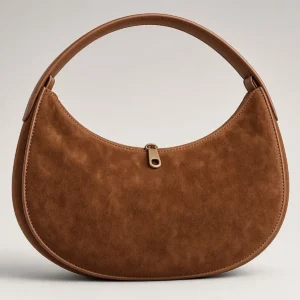
A hobo bag is a soft crescent: the top line curves down into a half-moon and the bag sags against your side. A bucket bag is a tall cylinder with a flat round or oval base, usually closed with a drawstring, and it stands up when you set it down. A slouchy bag is the broad family of soft, unstructured shoulder bags that fold and drape instead of holding a shape; every hobo is a slouchy bag, but not every slouchy bag is a hobo. Choose a hobo for a big, comfortable everyday load, a bucket for a small load you want to reach into fast, and a slouchy rectangle when you want the softness of a hobo with a flatter, simpler outline.
This guide explains how to tell the three apart at a glance, compares them on capacity, closure, comfort and security with real measurements, and ends with a quick way to choose.
Disclosure: We are a leather bag workshop and the product boxes show our own bags, with prices as listed in November 2026. The comparison applies to any brand.
Hobo vs bucket vs slouchy bag at a glance
| Hobo bag | Bucket bag | Slouchy bag | |
|---|---|---|---|
| Defining feature | Crescent top line that dips in the middle | Round or oval flat base, tall body | No fixed shape; folds and drapes |
| Structure | Soft | Semi-structured base, soft walls | Soft |
| Stands up empty? | No | Yes | No |
| Usual closure | Zip or magnetic snap | Drawstring, sometimes a snap | Magnetic snap, zip or open |
| Usual strap | One shoulder strap, 9 to 11 in drop | Shoulder strap plus a crossbody strap | One shoulder strap, 10 to 12 in drop |
| Typical width | 14 to 17 in | 9 to 11 in | 14 to 17 in |
| Capacity | Large | Small to medium, deep not wide | Large |
| Tablet | Usually up to 13 in | Usually no | Usually up to 13 in |
| Access | Wide zip, one hand | Open the drawstring, reach down | Wide opening, one hand |
| Look | Relaxed, polished in smooth leather | Casual, a little bohemian | Relaxed, minimal |
| Best for | Long days, commuting, heavy loads | Weekends, errands, light loads | Everyday carry, travel, soft dressing |
What is a hobo bag?
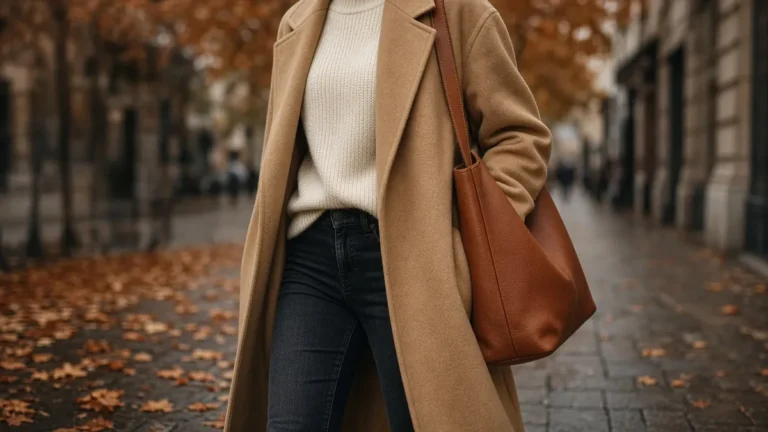
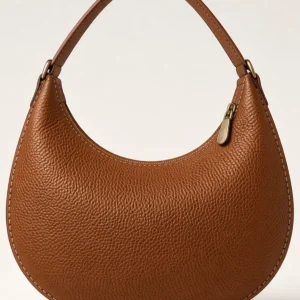
A hobo is a soft shoulder bag whose top edge curves down between the strap ends, so it sits as a crescent or half-moon. The body is cut from supple leather or suede without stiffeners, and when you put it down it slumps forward instead of standing. The name is usually traced to the bundles carried over the shoulder by traveling workers in early 20th-century America.
What makes a good hobo:
- A zip across the top. The crescent leaves a wide mouth, and a magnetic snap alone lets the sides gape. A full zip keeps it closed in a crowd.
- A strap drop of about 9 to 11 inches, so the bag sits under the arm with a coat on.
- An inside zip pocket placed high, so keys and cards don’t sink to the bottom of the curve.
- A base wide enough to hold the load. A narrow base makes a full hobo bulge and pull.
For a fuller roundup of shapes and sizes, see our guide to the best leather hobo bags.
What is a bucket bag?
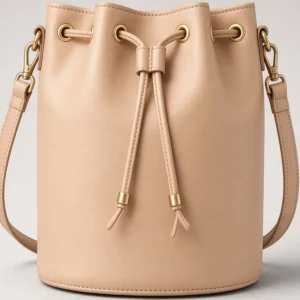
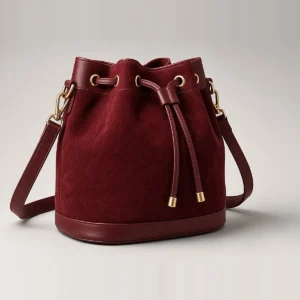
A bucket bag is named for its shape: a tall, roughly cylindrical body on a flat round or oval base, with a top that usually gathers shut on a drawstring. Because the base is firm, a bucket stands upright on a table or the floor of a car, and you look straight down into it. It is deep rather than wide, so tall things (a water bottle, a folded umbrella, a small pouch) fit better than flat, wide things like a tablet or a laptop.
What makes a good bucket bag:
- A firm base, ideally a separate panel, so it doesn’t fold when you put it down.
- A drawstring that runs smoothly through reinforced eyelets or loops, and closes the top fully.
- Two ways to carry it: a short shoulder strap and a longer crossbody strap.
- An inside pocket or a zip pouch, because small things gather in the round base.
Our explainer what is a bucket bag? covers its history and the different closures.
What is a slouchy bag?
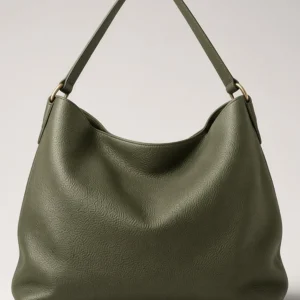
“Slouchy” describes behavior, not one shape: a bag cut from soft leather with little or no lining or stiffening, so it collapses, folds and molds to whatever is inside. Hobos are the best-known slouchy bags. Others include soft rectangular shoulder bags, soft totes and soft bucket bags.
A slouchy rectangle is the style people mean when they say “slouchy bag” without saying “hobo”: a wide, soft, flat-bottomed shoulder bag with a straight top edge. It holds as much as a hobo, lies flatter against your side, and usually closes with a hidden magnetic snap.
The real differences, side by side
1. Shape and how they stand

The fastest test is to put the bag down. A hobo slumps into a crescent. A slouchy bag folds forward or flattens. A bucket bag stands on its base. If it stands and has a drawstring, it is a bucket; if it slumps and the top line curves, it is a hobo; if it slumps and the top line is straight, it is a slouchy shoulder bag.
2. Capacity, measured
Outside measurements can mislead with soft bags, but they still show the order of size. Here are three real bags measured flat, with a rough box volume (width × height × depth). A crescent or cylinder holds less than its box, so treat these as upper limits.
| Bag | Width × height × depth | Rough box volume | Strap drop | Empty weight | Tablet |
|---|---|---|---|---|---|
| Hobo (Hollis, leather) | 15.75 × 11.75 × 4.75 in | About 14 L | 9.75 in | 1.5 lb | Up to 13 in |
| Slouchy shoulder bag (Selby) | 16.25 × 11 × 4.25 in | About 12 L | 10.75 in | 1.3 lb | Up to 13 in |
| Bucket bag (Kendal, leather) | 9.75 × 9 × 4.75 in | About 7 L | 11 in, plus crossbody strap | 0.9 lb | No |
In practice, a hobo or a slouchy bag carries about twice what a bucket bag does. The bucket wins on height for its size, which is why a 16 oz water bottle fits upright in one.
3. Closure and security
- Hobo: usually a zip, which makes it the most secure of the three when you are on a train or in a crowd.
- Bucket bag: a drawstring closes the top, but it is slower to open and close, and a loose drawstring leaves a gap. Choose one with a snap or a zip pouch inside if you carry cards and a phone in it every day.
- Slouchy bag: a hidden magnetic snap is common. It is fast, but the corners can open. Keep a zip pouch for valuables.
4. Comfort
Soft bags are comfortable because they shape themselves to your side instead of pressing a corner into your hip. A hobo and a slouchy bag spread a big load along your ribs; a bucket bag carries less weight but swings more, because it hangs away from the body as a round shape. Worn crossbody on its long strap, a bucket bag is the steadiest of the three on a long walk.
5. Organization
All three are worse at organization than a structured bag. In a hobo, things slide to the low point of the curve; in a bucket, they collect in the round base; in a slouchy bag, they fall into the folds. The fix is the same: one inside zip pocket for keys and cards, and one or two small pouches. Our guide on what to keep in your everyday bag has a pouch system that works in soft bags.
6. Look and dressiness
- A hobo in smooth leather reads polished enough for most offices; in suede it reads relaxed.
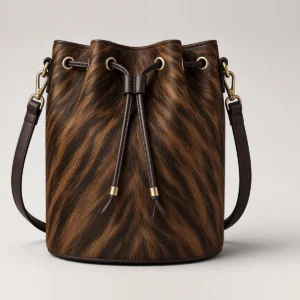
- A bucket bag reads casual and a little bohemian, especially in suede or hair-on hide.
- A slouchy rectangle reads minimal: it works with knitwear, denim and tailoring alike.
Hobo vs bucket bag: which is better for everyday use?
For most people who carry a full day’s worth of things, the hobo is the better everyday bag. It takes more, opens with one hand, closes with a zip, and stays comfortable when the load shifts. The bucket bag is the better everyday bag in one case: you carry little (phone, cards, keys, sunglasses, a bottle), you like a bag that stands up on a café table, and you want the option of wearing it crossbody.
Hobo vs slouchy bag: what is the difference?
A hobo is a slouchy bag with a specific crescent shape. A slouchy rectangle is wider and flatter, sits closer to the body, and tends to be lighter because there is less curve to support. Choose the hobo if you like the classic half-moon look and a zip top; choose the slouchy rectangle if you want the softest, lightest option and don’t mind a snap closure.
Which one should you choose?
| If you… | Choose |
|---|---|
| Carry a tablet, a water bottle and a sweater | Hobo or slouchy bag |
| Want a zip for trains, crowds and travel | Hobo |
| Carry only a phone, cards, keys and sunglasses | Bucket bag |
| Want a bag that stands up when you put it down | Bucket bag |
| Want to switch between shoulder and crossbody | Bucket bag with a long strap |
| Want the lightest, softest feel | Slouchy rectangle |
| Need it to pass at the office | Hobo in smooth leather |
| Prefer a casual, textured look | Bucket bag in suede or hair-on hide |
If you are still undecided, think about how you put your bag down. People who drop their bag on a chair or the floor of the car tend to like a hobo; people who set it on a table and want to look into it tend to like a bucket.
Leather choice changes all three
The same shape behaves differently in different leathers:
- Smooth full-grain leather keeps a cleaner line and wipes clean. A hobo in smooth leather is the dressiest soft bag.
- Suede makes any of the three softer and more relaxed. It needs brushing and should stay out of heavy rain.
- Pebbled or milled leather is the most forgiving for a slouchy bag: the grain hides scratches and creases.
- Hair-on hide suits bucket bags, because the base holds the shape and the hair stays upright.
If you are choosing between soft and firm leathers in general, our guide to soft vs structured leather bags explains how each one wears and ages.
Caring for soft bags
Soft bags lose their shape in storage, not in use. When you put one away, fill it loosely with acid-free tissue into its natural curve and lay it on its base or side instead of hanging it from the strap. Our guide on how to store a leather bag covers stuffing, dust bags and humidity, and how to clean a leather bag covers everyday marks.
For other bag shapes, see the full guide to types of handbags, or compare tote vs shoulder bag vs satchel. To browse the shapes in this guide, see our leather hobo bags, leather bucket bags and slouchy leather shoulder bags. Every bag is made to order and dispatched in 5 to 7 working days, and up to three initials are free.
Frequently asked questions
What is the difference between a hobo bag and a bucket bag?
A hobo is a soft crescent-shaped shoulder bag that slumps when you put it down and usually closes with a zip. A bucket bag is tall and cylindrical with a flat round base, stands upright, and usually closes with a drawstring. A hobo holds about twice as much.
Is a hobo bag a slouchy bag?
Yes. A hobo is the best-known type of slouchy bag. “Slouchy” describes any soft, unstructured bag that folds and drapes, including soft rectangles, soft totes and some bucket bags.
Which is bigger, a hobo or a bucket bag?
Usually the hobo. A typical leather hobo is 15 to 16 inches wide and holds about 14 liters by box measure; a typical bucket bag is 9 to 11 inches wide and holds about 7 liters.
Can a bucket bag hold a laptop?
Most can’t. Bucket bags are deep but narrow, so a 13-inch laptop doesn’t lie flat inside. A large hobo or a slouchy shoulder bag can take a tablet up to about 13 inches; for a laptop, choose a tote.
Are hobo bags good for work?
Yes, if the hobo is smooth leather with a zip and an inside pocket. It carries a tablet, a wallet and a lunch, and it reads polished enough for most offices.
Are bucket bags still in style?
Yes. Bucket bags have stayed in rotation for years because the shape is practical and easy to dress up or down. Suede and hair-on bucket bags are especially popular for fall and winter.
How do I keep a slouchy bag from looking sloppy?
Don’t overfill it, use one or two pouches so the load stays flat, and choose pebbled or milled leather that creases gracefully. Store it stuffed with tissue so it keeps its natural curve.
Should a hobo bag have a zip?
If you carry it every day, yes. The crescent leaves a wide opening, and a zip is the only closure that keeps it fully shut in crowds and on public transport.