How to Store a Leather Bag: Step by Step, by Bag Type and by Climate
Most leather bags are damaged in the closet, not on the street. This step-by-step guide covers the humidity and temperature leather needs, how to stuff and dust-bag a bag, whether to stand, lay or hang it by bag type, closets, humid climates, long-term storage, and how to fix mold, creases and smells.

To store a leather bag, empty it, wipe it clean and let it dry completely, then stuff it loosely with acid-free tissue so it holds its shape, tuck in or unclip long straps, wrap hardware in tissue and put the bag in a breathable cotton dust bag. Stand it upright on a shelf with space around it, somewhere cool, dark and dry: about 60 to 70°F and 40 to 55 percent relative humidity, away from sunlight, heaters, exterior walls and plastic. Check it every couple of months, and condition it before and after long storage.
That is the short version. The rest of this guide explains why each step matters, how to store each type of bag (a slouchy hobo needs different care from a structured satchel), how to organize purses in a closet, what to do in humid or very dry climates, how to store a bag for a season or longer, and how to fix the problems storage causes.
Disclosure: We make leather bags, and a few of ours appear below as examples, with prices as listed in November 2026. The storage advice works for any leather bag.
The short version: do’s and don’ts
| Do | Don’t |
|---|---|
| Empty every pocket | Leave pens, receipts, cosmetics or coins inside |
| Clean and fully dry the bag first | Put a bag away damp or dirty |
| Stuff with acid-free tissue or a clean cotton T-shirt | Stuff with newspaper (the ink transfers) or overfill it |
| Use a breathable cotton dust bag or pillowcase | Seal it in plastic or an airtight bin |
| Stand structured bags upright on a shelf | Stack bags on top of each other |
| Leave a few inches between bags | Squash bags together in a drawer |
| Tuck in or unclip long straps and chains | Hang bags by their straps for months |
| Keep it cool, dark and dry | Store it in an attic, basement, garage or car |
| Check and air it every two to three months | Forget it for a year |
| Condition before and after long storage | Over-condition, which leaves leather sticky |
Why storage damages leather
Leather is skin: a dense web of collagen fibers that takes on and gives off moisture with the air around it. Nearly every storage problem comes from one of four things:
- Too much moisture: mold, mildew, musty smells and water stains.
- Too little moisture: stiffness, dryness and, eventually, cracking.
- Heat and light: fading, dried-out surfaces and softened finishes.
- Pressure: creases, flattened bodies, dents from hardware and stretched straps.
Each step below deals with one of these.
The ideal conditions for storing leather
| Factor | Aim for | Why |
|---|---|---|
| Relative humidity | About 40 to 55 percent, steady | Mold can grow on leather above about 65 percent; below about 30 percent leather dries and loses flexibility |
| Temperature | About 60 to 70°F, steady | Heat speeds up drying and aging; swings cause humidity swings and condensation |
| Light | Dark, or indirect light only | UV fades dyes and dries the surface, especially light colors and natural finishes |
| Air | Some circulation | Still, damp air lets mold take hold |
| Contact | Nothing pressing on the bag | Dyes transfer, finishes stick, hardware dents |
These numbers come from how museums care for leather. The Canadian Conservation Institute notes that relative humidity above 65 percent favors mold on leather, that conditions below 30 percent risk loss of flexibility, and that a change of just 3°C (about 5°F) shifts relative humidity by around 10 percent, which is why a steady spot matters more than a perfect one. A digital hygrometer costs a few dollars and tells you whether your closet needs help.
Where to store leather bags at home
| Good places | Bad places |
|---|---|
| A bedroom closet on an inside wall | Attic (too hot, big swings) |
| A wardrobe or cupboard shelf in a living space | Basement (damp) |
| A shelf with a door that keeps light out | Garage or car (heat, cold and damp) |
| Under a bed in a breathable box, in a dry room | Next to a radiator, heating vent or window |
| Closets on exterior walls in winter (cold and condensation) | |
| Bathrooms (steam) |
How to store a leather bag, step by step
- Empty it completely. Pens leak, lipsticks melt, receipts fade onto the lining, and coins and keys press marks into the leather. Shake out crumbs; they attract insects.
- Clean it. Wipe the outside with a soft, dry or barely damp cloth to remove dust and skin oils. Deal with marks now, because stains set in storage. Our guide on how to clean a leather bag covers ink, grease and water marks.
- Let it dry fully. If the bag has been in rain, leave it open at room temperature for a day or two, away from heaters and hair dryers. Putting away a bag that is even slightly damp is the most common cause of mold. See can leather get wet?
- Condition it if it will be stored for more than a couple of months. A thin coat of neutral leather conditioner, buffed off, keeps smooth leather supple. Let it absorb for a few hours before you pack the bag away. Skip this for suede.
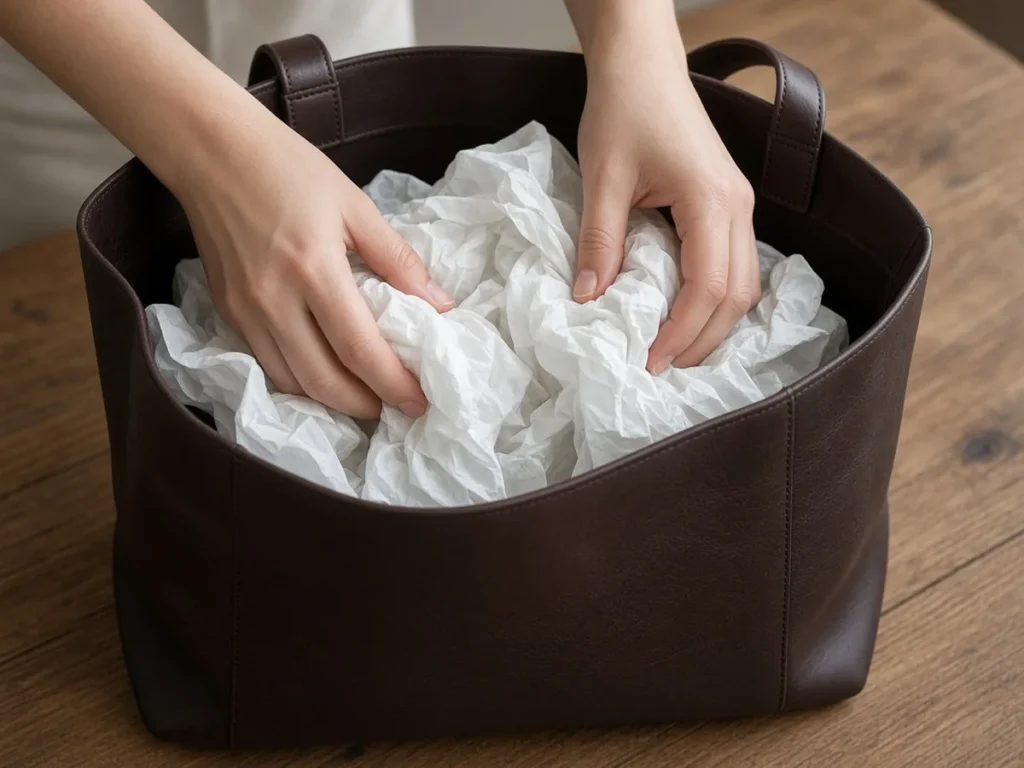
- Stuff it. Fill the body loosely with acid-free tissue or a clean cotton T-shirt until the sides stand naturally. More on this below.
- Protect the hardware. Wrap buckles, clasps and zip pulls in a fold of tissue so they don’t press dents into the leather or scratch the next bag.
- Deal with the strap. Unclip a detachable strap and store it flat or loosely coiled inside the bag. Lay a fixed strap along the bag rather than letting it hang.
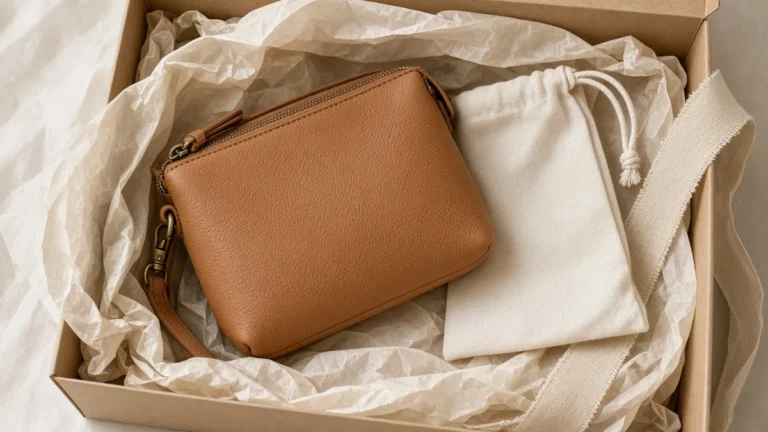
- Put it in a dust bag. A cotton dust bag or a plain cotton pillowcase keeps off dust and light while letting the leather breathe.
- Place it on a shelf. Upright for structured bags, resting on its base for soft ones, with a few inches of space on each side.
How to stuff a leather bag
Stuffing is what keeps a bag from collapsing into creases that can become permanent folds. Fill it until the walls stand up the way they do when the bag is in use, not until they bulge.
| Use | Avoid |
|---|---|
| Acid-free, unbuffered tissue paper | Newspaper (ink rubs off and the paper is acidic) |
| A clean cotton T-shirt, scarf or small towel | Colored tissue (dye can transfer) |
| A purse pillow or bag shaper made for the job | Plastic bags or bubble wrap touching the leather |
| Bubble wrap inside a layer of tissue, for large bags | Overstuffing, which stretches seams and leather |
Conservators specifically recommend cotton or unbuffered acid-free tissue for wrapping leather, because these materials absorb and release moisture and so help steady the humidity right around the bag.
Dust bags, boxes and what to avoid
Dust bags: cotton or linen is best. If your bag came with a cotton dust bag, use it; a plain, light-colored cotton pillowcase works just as well. Avoid dark or printed fabric on light leather, which can transfer dye in damp weather.

Boxes: a breathable box (cardboard or a fabric storage box) adds a second layer against light and dust and stops other things from being stacked on the bag. Put the bag in its dust bag first, and make sure the box is big enough that the bag isn’t squashed.
Plastic: avoid sealed plastic bags, vacuum bags and airtight plastic bins for leather. They trap any moisture already in the leather or the air, which is exactly what mold needs, and some plastics can stick to finished leather over time. Clear acrylic display cases with open sides or vents are fine on a shelf, because air still moves.
Upright, flat or hanging? How to store each type of bag
The right position depends on how the bag is built. Hanging a bag by its strap for months is the one thing to avoid for every type: the weight stretches the strap and pulls the body out of shape at the anchors.
| Bag type | How to store it |
|---|---|
| Structured tote or work tote | Stuffed, upright on its base, handles standing up or folded gently forward |
| Satchel or top-handle bag | Stuffed, upright, top handle up; strap unclipped and stored inside |
| Shoulder bag | Stuffed, upright; strap laid along the top of the bag |
| Hobo or slouchy bag | Stuffed lightly so the curve holds, resting on its base, never hung |
| Bucket bag | Stuffed into its round shape, drawstring loosened |
| Crossbody or saddle bag | Stuffed, upright or flat; long strap coiled loosely inside |
| Clutch | Flat in its dust bag, nothing stacked on top |
| Backpack | Stuffed, standing, straps loosened and tucked behind |
| Weekender or duffle | Stuffed with a towel or packing cubes, on its base |
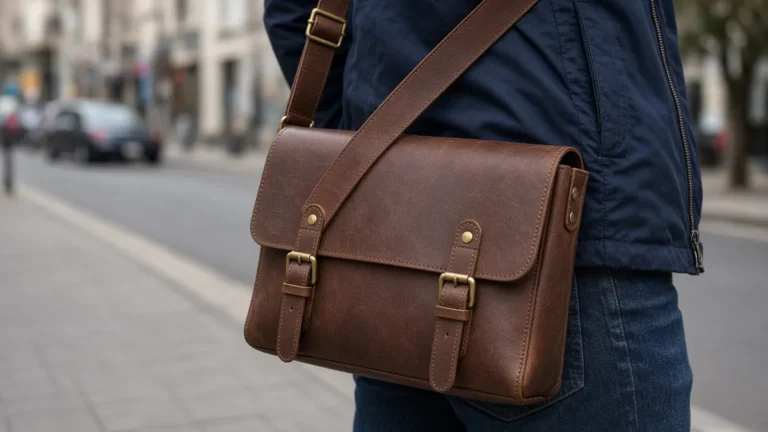
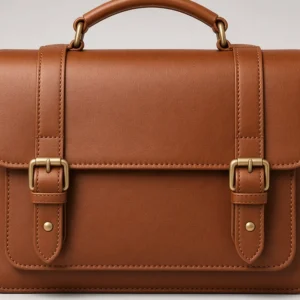
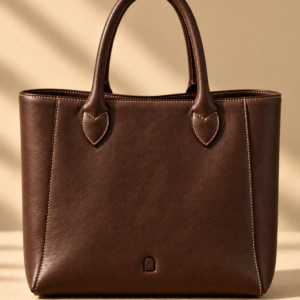
Structured bags like a leather satchel or work tote hold their shape easily if they stand upright with tissue inside:
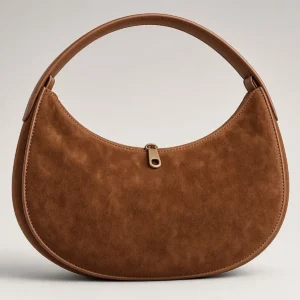
Soft bags need a little more help, because an empty hobo bag folds in on itself (see soft vs structured leather bags for why). Stuff it into its curve and lay it on its base:
How to store purses in a closet
- Use shelves, not hooks. A shelf at eye level or above keeps bags off the floor and away from shoes.
- Use shelf dividers. Vertical dividers keep bags upright and stop them leaning on each other, like books on a shelf.
- Leave space. A few inches between bags lets air move and stops straps pressing into the bag next door.
- Put heavy bags low and light bags high, so nothing gets crushed if a bag tips.
- Label dust bags or boxes so you don’t have to unpack five bags to find one.
- Rotate. Bags you use every week can sit out on a shelf without a dust bag; bags you use rarely should be bagged.
- Short-term hanging is fine for light bags. Hooking a light crossbody on a hook overnight does no harm. Months on a hook does.
If you own several kinds of bags, our guide to the types of handbags explains how each style is built, and tote vs shoulder bag vs satchel compares the three most common everyday shapes.
How to store different kinds of leather
| Leather | What to watch | Storage tip |
|---|---|---|
| Smooth full-grain | Drying in heat, fading in sun | Condition lightly before long storage; keep out of light |
| Suede and nubuck | Dust, crushed nap, water spots | Brush before storing; never condition; store in its own dust bag |
| Hair-on cowhide | Flattened or bent hair, insects | Store flat or upright with nothing pressing on the hair; brush with the grain first |
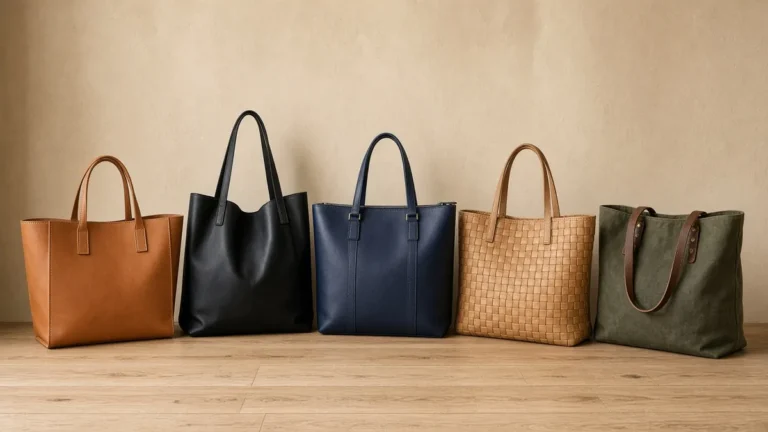
| Woven leather | Strips flattening or bending | Stuff firmly enough to keep the weave taut; no weight on top |
| Waxed canvas and leather | Wax sticking or rubbing off onto other things | Store in its own cotton bag away from light-colored items |
| Patent leather | Color transfer and sticking | Wrap in tissue so nothing touches the surface |
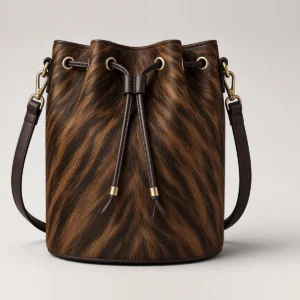
Full-grain leather also darkens and gains a patina with use and light. Storing a bag in the dark doesn’t stop this, but it does stop uneven fading where part of the bag sat in the sun. Read more in what is leather patina?
How to store leather bags in humid weather
If your summers are humid or you live near the coast, moisture is the main risk.
- Measure first. Put a hygrometer in the closet. If it stays above 60 percent, act.
- Run a dehumidifier or the air conditioning in the room during humid months. Both dry the air.
- Add silica gel packets to the shelf or box, not inside the bag touching the leather. Recharge them in a low oven when they turn color, following the packet’s instructions.
- Keep the closet door open for an hour or two each week to let air move.
- Keep bags off exterior walls, which are cooler and collect condensation.
- Check monthly in the wettest season. Look and smell: a musty smell comes before visible mold.
- Cedar blocks help keep closets fresh and deter moths, but keep them near the bags, not touching them, because cedar oil can mark light leather.
How to store leather bags to prevent mold
Mold needs moisture, still air and something to feed on (dust, skin oils, food crumbs). Take away all three:
- Clean the bag before storing so there is nothing for mold to feed on.
- Make sure it is completely dry.
- Store it in breathable cotton, never plastic.
- Keep the humidity under about 60 percent and the air moving.
- Check it every two to three months.
If you find mold: take the bag outside so spores don’t spread indoors. Brush off loose mold with a soft brush. Wipe the leather with a cloth dampened in a mix of equal parts white vinegar and water, or a leather cleaner, after testing on a hidden spot first. Wipe the lining too. Let the bag dry at room temperature, out of direct sun, then condition smooth leather lightly. If mold has grown into the lining or comes back, or the bag is valuable, take it to a leather specialist.
White film that isn’t mold: a white, waxy bloom that wipes away and smells of nothing is often fat or wax rising to the surface of oiled leather, called spew. Mold is fuzzy or powdery, often in spots, and smells musty. Spew wipes off with a dry cloth and a little warmth from your hand.
How to store leather bags for a long time
For a bag you won’t use for a season or more:
- Do every step above, including conditioning (smooth leather only).
- Use fresh acid-free tissue and a clean dust bag.
- Store in a box on a shelf, in a room you live in, not an attic or basement.
- Take it out every two to three months: look, smell, let it breathe for an hour and replace the tissue if it feels damp. Museums inspect stored leather on a regular schedule for mold and insects; every two to three months suits a bag at home.
- Condition again when you take it out of storage for good.
Storing leather bags in dry winters
Heated homes can drop below 30 percent humidity in winter, which dries leather. Keep bags away from radiators and heating vents, condition smooth leather lightly once at the start of winter, and consider a room humidifier if your hygrometer reads very low for weeks.
Storing a bag while you travel
Stuff it with soft clothes (socks, a scarf), put it in its dust bag and pack it in the middle of your suitcase with softer things around it, so nothing presses into it. Take it out and let it breathe when you arrive.
Problems storage causes, and how to fix them
| Problem | Likely cause | Fix |
|---|---|---|
| Creases or folds | Stored empty or squashed | Stuff the bag, leave it in a warm room for a few days; massage gently with a little conditioner |
| Flattened shape | Bags stacked or crowded | Stuff firmly and stand it upright for a week |
| Musty smell | Damp storage, no air | Air it in a dry, shaded place for a day; put an open box of baking soda inside for a night (not touching the leather) |
| Mold spots | Humidity above about 65 percent | See the mold steps above |
| White waxy bloom | Spew from oils in the leather | Wipe off with a dry cloth |
| Dents from hardware | Buckles pressing into leather | Massage with a little conditioner; wrap hardware next time |
| Color transfer | Contact with dyed fabric or another bag | Clean gently; store each bag separately in light cotton |
| Dry, stiff leather | Heat or very dry air | Condition lightly, then use the bag; flexing helps |
| Stretched strap | Hung for months | Hard to reverse; store straps flat from now on |
Taking a bag out of storage
Unpack it, remove the tissue, wipe it with a dry cloth and let it sit in the room for a few hours. If the leather looks dry, condition it lightly. Then use it: leather that is flexed and handled stays more supple than leather that sits.
The bags you buy matter too
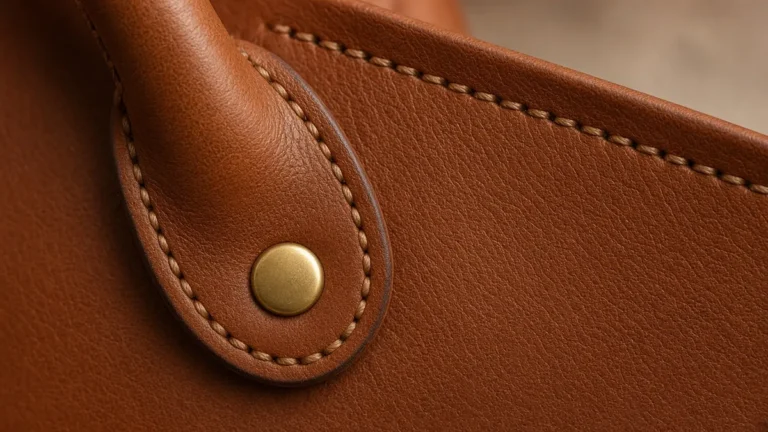
Well-made bags store better. A separate base panel and a lined body help a bag keep its shape; burnished edges don’t crack in dry air the way painted edges can; and solid brass hardware doesn’t corrode in humid closets. Ours are full-grain leather, suede or hair-on hide, cut and stitched to order and dispatched in 5 to 7 working days. Browse all leather handbags and purses, and for everyday care see our leather bag care guide.
Frequently asked questions
Should leather bags be stored in plastic?
No. Plastic bags and airtight bins trap moisture against the leather, which encourages mold, and some plastics can stick to finished leather. Use a breathable cotton dust bag or pillowcase, and a cardboard or fabric box if you want extra protection.
Is it OK to hang leather bags?
Not for long. Hanging a bag by its strap or handles for months stretches the strap and pulls the body out of shape at the anchors. Hanging a light bag on a hook overnight is fine; for storage, stand it on a shelf.
Should I store my bag in its dust bag?
Yes. A cotton dust bag keeps dust and light off the leather while letting it breathe. If you have lost the dust bag, a plain light-colored cotton pillowcase works just as well.
How do I keep my leather bag from losing its shape?
Stuff it loosely with acid-free tissue or a cotton T-shirt until the sides stand naturally, store it upright with space around it, and never stack bags on top of each other. Store soft bags like hobos resting on their base, stuffed into their curve.
How do you store leather bags for a long time?
Clean, dry and lightly condition the bag, stuff it with fresh acid-free tissue, put it in a cotton dust bag and a breathable box, and keep it in a cool, dark room at about 40 to 55 percent humidity. Check it every two to three months.
Can I store leather bags in the attic, basement or garage?
It is best not to. Attics get hot and dry, basements are damp, and garages swing between heat, cold and humidity. All three speed up drying, cracking or mold. A closet in a room you live in is far safer.
How do I store leather bags in humid weather?
Keep the room’s humidity under about 60 percent with a dehumidifier or air conditioning, put silica gel packets on the shelf (not touching the leather), keep bags off exterior walls, and check them monthly for any musty smell.
How often should I condition a leather bag in storage?
Condition smooth leather lightly before it goes into long storage and again when it comes out. For a bag stored a year or more, condition once in between when you check it. Never condition suede.
What is the white stuff on my stored leather bag?
If it is fuzzy or powdery and smells musty, it is mold; clean it outdoors and dry the bag well. If it is a waxy film with no smell that wipes away easily, it is probably spew, fats rising from the leather, and is harmless.