Types of Handbags: 35 Styles, Named and Explained
From totes and hobos to saddle bags and minaudières, this guide names every common type of handbag, shows how to tell them apart, and explains what each one carries, with real sizes and strap drops so you can pick the right style for your day.

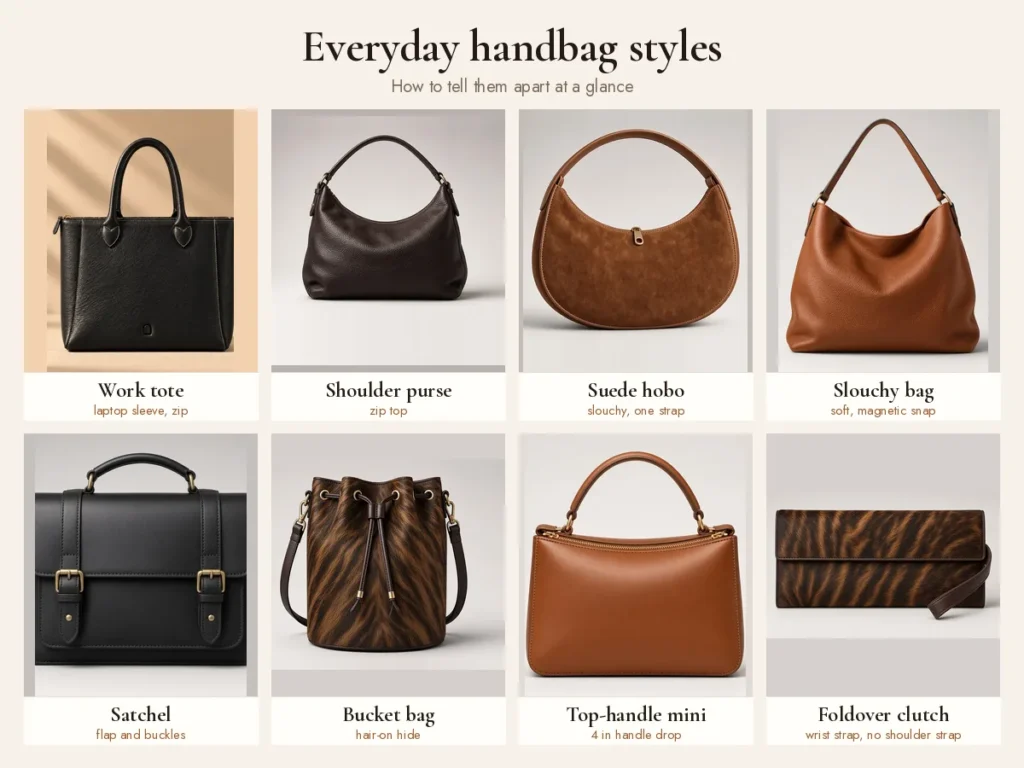
There are around 35 types of handbags in common use, but almost all of them are named in one of four ways: by how you carry the bag (tote, shoulder bag, crossbody, clutch, backpack), by its shape (hobo, bucket, saddle, baguette, half-moon), by its size (mini, micro, oversized) or by its job (work tote, laptop bag, travel purse, diaper bag). Learn those four naming patterns and you can identify almost any bag in a store, and know what it will hold before you pick it up.
This guide names every common handbag and purse style, shows how to spot each one, gives real measurements and strap drops, and ends with a short guide to choosing. We make leather bags, so where we make a style, you will see it right under its description.
Disclosure: We are a leather bag workshop. The product boxes in this guide show our own bags, with prices as listed in November 2026. The definitions apply to any brand.
The main types of handbags at a glance
| Type | How you carry it | How to spot it | Best for |
|---|---|---|---|
| Tote | Two handles, on the shoulder or in the hand | Wide, open or zip top, roomy rectangle | Work, errands, travel |
| Shoulder bag | One strap that sits on the shoulder | Medium body that tucks under the arm | Everyday use |
| Hobo | One strap, on the shoulder | Soft crescent that slumps in the middle | Relaxed everyday use |
| Satchel | Top handle plus a long strap | Structured, flat base, flap or zip | Work and smart days |
| Bucket bag | Shoulder or crossbody | Round or oval base, drawstring or open top | Weekends, casual days |
| Top-handle bag | In the hand or crook of the arm | One short rigid handle, stands on its own | Occasions, office |
| Crossbody | Long strap worn across the body | Small to medium, flap or zip | Hands-free days, travel |
| Saddle bag | Crossbody or shoulder | D-shape with a curved flap | Everyday, western looks |
| Messenger | Wide strap across the body | Soft flap bag, laptop-sized | Commuting, study |
| Sling / belt bag | Across the chest or at the waist | Slim curved pouch with a buckle strap | Travel, festivals, errands |
| Backpack | On both shoulders | Two straps and a top handle | Commuting, walking cities |
| Clutch | In the hand or under the arm | No strap, slim envelope or box | Evenings, weddings |
| Wristlet | Around the wrist | Small pouch on a short loop | Nights out, travel |
| Mini bag | In the hand or crossbody | Any shape, scaled down to phone size | Evenings, short outings |
How handbags get their names
Most “how many types of handbags are there” lists mix up four different ideas. Separating them makes every name on this page easier to remember:
- By carry. Tote, shoulder bag, crossbody, sling, belt bag, backpack, clutch, wristlet, top-handle. The name tells you where the bag sits on your body.
- By shape. Hobo, bucket, saddle, half-moon, baguette, barrel, trapeze, box. The name tells you the silhouette.
- By size. Mini, micro, oversized. These are modifiers: a mini tote is still a tote.
- By job. Work tote, laptop bag, travel purse, diaper bag, evening bag. These describe what the bag is for, not what it looks like.
So one bag can carry several names at once. A small saddle-shaped bag on a long strap is a saddle bag (shape), a crossbody (carry) and a mini bag (size). When shopping, start with carry (how you want to wear it), then shape (the look), then check the size.
Everyday shoulder and hand-carried bags
These are the bags most people mean by “handbag”: medium to large, worn on the shoulder or carried by a handle, sized for a full day.
1. Tote bag
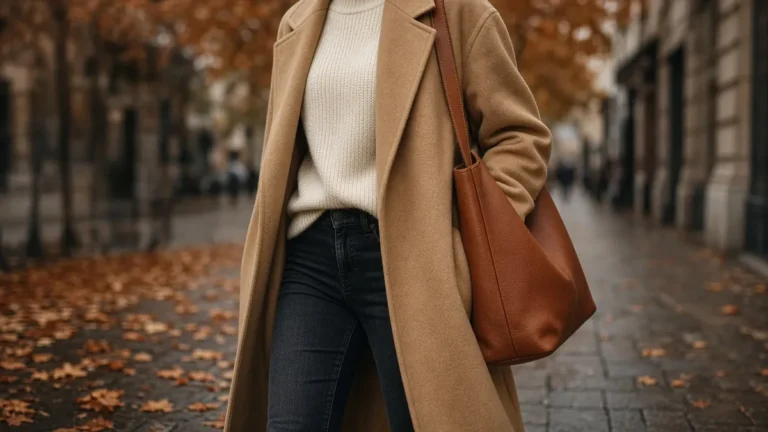
What it is: A large, rectangular bag with two parallel handles and a wide opening, open or with a zip or magnetic closure. How to spot it: Two matching handles long enough to go over the shoulder (a handle drop of about 9 to 11 inches), and a body wide enough for a laptop or folder. Best for: Work, errands, travel days and anyone who carries a lot.
The tote is the workhorse of the handbag world. Leather totes range from small zip-top styles around 11 inches wide to large work totes over 18 inches wide that take a 16-inch laptop. There are many sub-types (boat, shopper, north-south, east-west, zip, laptop), explained in our guide to the different kinds of tote bags.
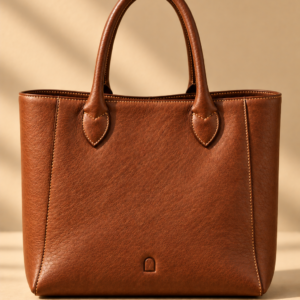
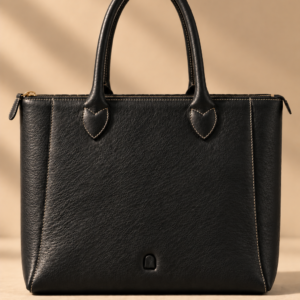
Browse all leather tote bags, or see our edit of the best leather tote bags for women.
2. Shoulder bag
What it is: A medium bag with a single strap that sits on the shoulder, so the bag rests at the waist or tucks under the arm. How to spot it: One strap with a drop of roughly 8 to 12 inches, a body usually 10 to 14 inches wide, and a zip or flap closure. Best for: Everyday use, the office, dinner. It is the classic “purse.”
“Shoulder bag” is the broadest category: hobos, baguettes and many bucket bags are technically shoulder bags too. A structured shoulder bag with a full zip is the most secure everyday option short of a crossbody, because the bag sits under your arm and closes completely.
See all leather shoulder bags.
3. Hobo bag
What it is: A soft, slouchy bag on one shoulder strap that curves down into a crescent shape when you carry it. How to spot it: Unstructured leather or suede that sags in the middle, a single wide strap and usually a zip top. Best for: Relaxed everyday wear with jeans and knits, and anyone who wants a big bag that molds to the body.
The name is usually traced to the bundle carried over the shoulder by traveling workers in early 20th-century America. A good hobo holds more than its outline suggests, because the soft body expands around what you put in. Look for an inside zip pocket high on the back wall, or keys sink to the bottom of the curve. Our guide to the best leather hobo bags covers what to check.
Shop all leather hobo bags.
4. Slouchy shoulder bag
What it is: A wide, soft shoulder bag that collapses when empty, similar to a hobo but usually wider and less curved. How to spot it: An unlined or lightly lined body, a hidden magnetic snap instead of a zip, and a drop long enough to wear over a coat. Best for: Lightweight everyday carry when softness matters more than pockets. To compare it with the hobo and the bucket bag, see hobo vs bucket vs slouchy bag.
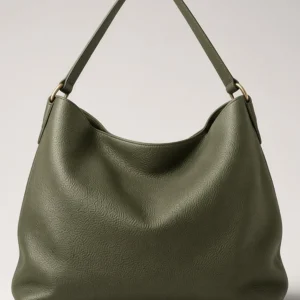
See all slouchy shoulder bags.
5. Satchel
What it is: A structured bag with a flat base, a top handle and a removable long strap, often with a flap and buckles. How to spot it: A defined, boxy shape that stands on its own, a short top handle (around 4 inches of drop) plus a strap for the shoulder or crossbody. Best for: Work, school and smart casual days, especially if you carry a tablet or papers that need to stay flat.
The original satchel was a schoolbag with a flap and a long strap. Fashion satchels kept the structure and added a top handle, so the same bag can be carried by hand to a meeting and worn crossbody on the commute. Read more in our guide to the best leather satchels for women.
Shop leather satchels.
6. Bucket bag
What it is: A bag with a round or oval base and taller-than-wide sides, closed with a drawstring, a snap or left open. How to spot it: A cylinder silhouette and a single strap, often detachable for crossbody wear. Best for: Weekends and casual days. Easy to drop things into, harder to find small items in.
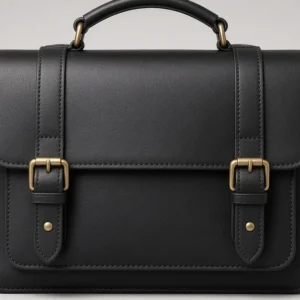
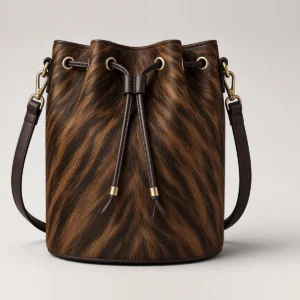
Learn more in what is a bucket bag? or shop leather bucket bags.
7. Top-handle bag
What it is: A structured bag carried by one short, rigid handle, also called a “lady bag.” How to spot it: A handle drop of 3 to 5 inches, a firm body that stands up, often a clasp or turn-lock. Many come with a detachable strap. Best for: Occasions, interviews, smart office outfits. Carried in the hand or the crook of the arm.
8. Doctor bag
What it is: A top-handle bag based on the physician’s bag, with a hinged metal frame that opens wide at the top. How to spot it: A wide flat base, a top that opens into a gaping mouth, and two short handles. Best for: Vintage-inspired looks and people who want to see everything inside at a glance.
9. Baguette bag
What it is: A small, long and narrow shoulder bag with a short strap, designed to tuck under the arm like a loaf of French bread. How to spot it: An east-west rectangle about 10 inches wide and only 5 or 6 inches tall, on a short strap. Best for: Evenings and 90s-inspired outfits. It holds a phone, cards and keys.
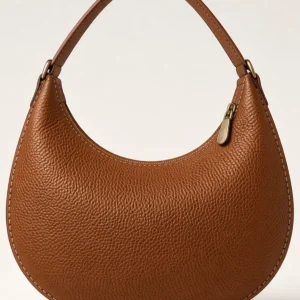
10. Half-moon bag
What it is: A bag shaped like a half circle, with the zip running along the curved top or the flat edge. How to spot it: A flat bottom and a domed top, or the reverse, usually small to medium. Best for: A neat everyday crossbody or shoulder bag with no corners to wear through.
11. Trapeze bag
What it is: A structured bag that is narrower at the top than at the base, with side “wings” that fold in. How to spot it: A trapezoid outline and a top handle, often with a long strap too. Best for: Office and occasions when you want a structured bag with more room than a satchel.
12. Barrel bag
What it is: A cylinder-shaped bag lying on its side, with a zip running the full length and two short handles. Small versions are handbags; large ones are gym or travel bags. How to spot it: A round end panel on each side. Best for: Casual days and short trips.
Crossbody and hands-free bags
These bags leave both hands free. The strap is the deciding detail: a crossbody strap needs a drop of roughly 20 to 24 inches for most adults, while a sling or belt bag uses a shorter buckle strap worn high on the chest or at the waist. If you’re deciding between a crossbody and a shoulder bag, see shoulder bag vs crossbody bag.

13. Crossbody bag
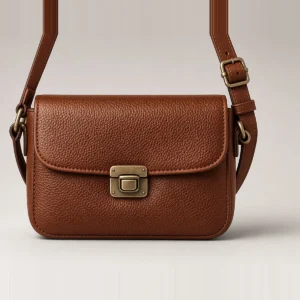
What it is: A small to medium bag on a long adjustable strap worn diagonally across the body, so the bag sits at the opposite hip. How to spot it: A strap that adjusts up to around 23 inches of drop, and a compact flap or zip body, often 8 to 11 inches wide. Best for: Hands-free days, travel, crowds and city walking. It is the safest everyday carry because the bag sits in front of you.
See all women’s crossbody bags or our guide to the best leather crossbody bags for women.
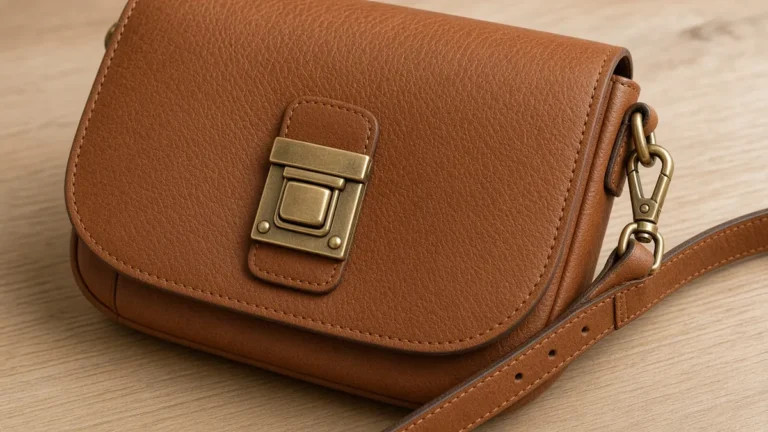
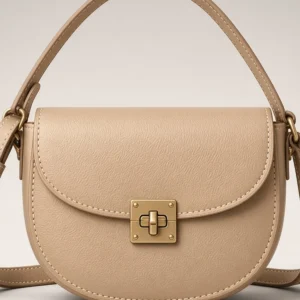
14. Saddle bag
What it is: A D-shaped bag with a curved flap over the whole front, inspired by the bags hung on a horse’s saddle. How to spot it: A rounded bottom, a flap that covers the opening (often with a turn-lock or buckle) and a crossbody or shoulder strap. Best for: Everyday wear and western-inspired outfits. The full flap makes it secure.
Read what is a saddle bag purse? or shop leather saddle bags.
15. Camera bag
What it is: A compact, boxy crossbody with a zip top and a deep base, named after the small bags once used for film cameras. How to spot it: A small rectangle about 3 inches deep, a full zip, a long strap. Best for: Travel and everyday carry for people who want a small bag that still holds sunglasses in their case.
16. Phone crossbody
What it is: A slim vertical bag sized for a smartphone, with card slots and a long strap. How to spot it: Taller than it is wide, about 5 inches across, often with card slots on the back. Best for: Errands, concerts and travel days when you only need a phone, cards and keys.

17. Messenger bag
What it is: A soft, wide flap bag worn across the body on a broad strap, originally made for couriers. How to spot it: A flap that covers most of the front, a strap about 1.25 to 2 inches wide, and a body big enough for a laptop. Best for: Commuting and study. See what is a messenger bag? for the difference between a messenger and a satchel.
18. Sling bag
What it is: A slim bag on a single buckle strap, worn high across the chest or back. How to spot it: A flat or slightly curved body, a front zip pocket and a strap that adjusts with a buckle rather than a slider. Best for: Travel, cycling and crowded places. More in our guide to the best leather sling bags for women.
Shop leather sling bags.
19. Belt bag
What it is: A small curved zip pouch on a buckled strap, worn at the waist or across the chest. In the US it is also called a fanny pack; in the UK, a bum bag. How to spot it: A crescent shape about 9 inches wide and a strap with a buckle. Best for: Festivals, travel and errands.
20. Backpack
What it is: A bag with two shoulder straps worn on the back, plus a top handle. How to spot it: Two padded straps that adjust at the base. Fashion backpacks are smaller and more structured than sports ones. Best for: Commuting on foot or by bike, and carrying a laptop without loading one shoulder. Our backpack is waxed canvas with a leather base and trim rather than all leather.
Small and evening bags
21. Clutch
What it is: A small bag with no strap or handle, carried in the hand or under the arm. How to spot it: A slim body, under an inch deep for flat styles, closed with a flap, frame or zip. Some hide a detachable wrist strap. Best for: Weddings, dinners and formal events.
Shop leather clutch bags.
22. Envelope or foldover clutch
What it is: A flat clutch whose top folds over like an envelope flap, usually closed with a magnet. Best for: Everyday evenings. Larger foldovers (around 11 inches wide) take a phone, cards, keys and even a small tablet.
23. Minaudière (box clutch)
What it is: A small, hard-framed clutch, often metal or covered in beads or crystals. Best for: Black-tie events. It holds a phone, a card and a lipstick, no more.
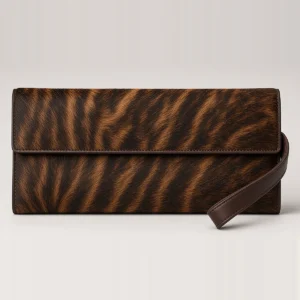
24. Wristlet
What it is: A small zip pouch or wallet with a short loop that goes around the wrist. Best for: Nights out, and as a “bag in a bag” you can lift out of a tote.
25. Pochette (pouch)
What it is: A small flat zip pouch, sometimes with a short chain or detachable strap. Best for: Organizing a large tote, or as a minimal evening bag.
26. Mini bag and micro bag
What it is: Any style scaled down. A mini bag usually takes a large phone lying flat; a micro bag may only take cards and lip balm. How to spot it: A body under about 9 inches wide. Best for: Evenings and short outings. Check the inside measurement against your phone before you buy; our guide to what fits in a mini bag shows how.

See all mini leather bags.
27. Wallet on a chain
What it is: A wallet with card slots and a zip section, hung on a long chain or strap so it works as a tiny crossbody. Best for: Travel days and evenings when you want your wallet and bag to be the same thing.
Work and travel bags
28. Work tote and laptop tote
What it is: A structured tote with a padded laptop sleeve, a zip or magnetic closure and a base that keeps its shape. Best for: The office and commuting. Measure your laptop: a 14-inch laptop needs a tote about 15 inches wide inside. Our laptop totes list the largest laptop each one takes, and our best leather work totes guide explains what to check.
29. Women’s work briefcase
What it is: A structured, zip-top bag with two top handles, a padded laptop sleeve and a detachable shoulder strap. Slimmer and lighter than a traditional briefcase. Best for: Client meetings and offices where a tote feels too casual.
Shop work bags for women.
30. Boat tote
What it is: A wide-based open tote with sturdy handles, first made for carrying ice and supplies to boats. Best for: Weekends, beach days and carrying bulky things. It stands up on its own.
31. Shopper
What it is: A large, light, usually unstructured tote with long handles and an open top. Best for: Markets and errands. It is a tote by another name, sold for carrying shopping.
32. Travel purse
What it is: Not a shape but a job: any purse with a secure closure, a crossbody or long shoulder strap and room for a passport. Saddle bags, satchels, hobos with zips and slings all qualify. Best for: Flights and sightseeing. See our travel purses and the best travel handbags guide.
33. Weekender and overnight bag
What it is: A large zip bag with two handles and a shoulder strap, sized for one to three nights. Best for: Weekends away. An 18 by 11 by 9 inch weekender fits the overhead bin on most US flights.
34. Diaper bag
What it is: A tote or backpack with a wipe-clean lining, bottle pockets and a changing mat. Best for: Parents. A large leather tote with an inside zip pocket and pouches inside can stand in for one.
35. Woven bag
What it is: A bag made from strips of leather (or straw, raffia or rattan) woven by hand into a basket or lattice pattern. Woven describes the material, so it can be any shape: tote, crossbody, belt bag. Best for: Spring and summer, and anyone who wants texture. Real woven leather shows the edges of each strip; embossed leather is a flat sheet stamped with a pattern.
See woven crossbody bags and woven leather totes.
Handbag sizes: what each type actually holds
Product photos rarely show scale. These are real measurements (width by height by depth) from our own bags, so you can compare against a bag you already own.
| Type | Example | Size (W × H × D) | Strap or handle drop | What fits |
|---|---|---|---|---|
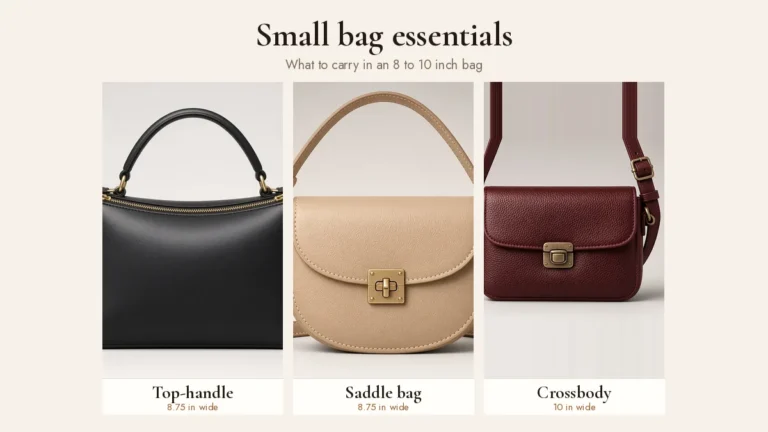
| Mini top-handle | Tilly | 8.75 × 6.25 × 3.5 in | 4 in handle, plus crossbody strap | Large phone, cards, keys |
| Saddle bag | Ripley | 8.75 × 7.5 × 2.75 in | Up to 22.75 in | Phone, card wallet, keys, sunglasses |
| Crossbody | Hawes | 10 × 7 × 3 in | Up to 23.5 in | Phone, full wallet, keys, lipstick |
| Bucket bag | Kendal | 9.75 × 9 × 4.75 in | 11 in | Wallet, phone, keys, small water bottle |
| Shoulder bag | Ashby | 12.5 × 9.5 × 4 in | 9.5 in | Wallet, phone, sunglasses, paperback |
| Satchel | Rydal | 12.5 × 9 × 3.25 in | 4 in handle, plus long strap | Tablet up to 11 in, papers |
| Hobo | Hollis | 15.75 × 11.75 × 4.75 in | 9.75 in | Water bottle, cardigan, tablet |
| Tote (medium) | Marlow | 14.5 × 11 × 5 in | 10.25 in | 13-inch laptop, notebook, lunch |
| Work tote (large) | Lorne | 18.5 × 12.25 × 5.5 in | 10.75 in | Laptop, files, a pair of flats |
| Clutch | Mabel | 11 × 7.5 × 0.75 in | Wrist strap | Phone, cards, keys, small tablet |
For more on fit, see our size guide.
Strap drop: the number that decides how a bag is worn
Strap drop is the distance from the top of the strap (or handle) to the top of the bag when the strap is pulled up. It, more than shape, decides which “type” a bag really is on your body:
| Drop | How it sits | Typical types |
|---|---|---|
| 3 to 5 in | Carried in the hand or crook of the arm | Top-handle, satchel handle, doctor bag |
| 8 to 11 in | On the shoulder, bag under the arm | Tote, shoulder bag, hobo, baguette |
| 12 to 15 in | Long shoulder carry, bag at the hip | Some hobos and bucket bags |
| 20 to 24 in | Across the body, bag at the opposite hip | Crossbody, saddle, camera, messenger |
If you are petite, a 20-inch crossbody drop may be enough; if you are tall or wear a heavy coat, look for at least 23 inches. A tote handle drop under about 9 inches will not go over the shoulder in winter.
Which type of handbag should you choose?
| If you need… | Choose | Why |
|---|---|---|
| One bag for everything | Structured shoulder bag or satchel with a long strap | Works by hand, on the shoulder and crossbody |
| Room for a laptop | Work tote, laptop tote or work briefcase | Padded sleeve and a firm base |
| Hands free and secure | Crossbody, saddle or sling | Sits in front of you, closes fully |
| Something soft and easy | Hobo or slouchy shoulder bag | Molds to the body, light to carry |
| Evenings and weddings | Clutch, mini bag or top-handle bag | Small and polished |
| Travel days | Saddle bag, sling or zip-top crossbody | Secure closure, passport-sized |
| Lots of bulky things | Boat tote or shopper | Wide base, wide opening |
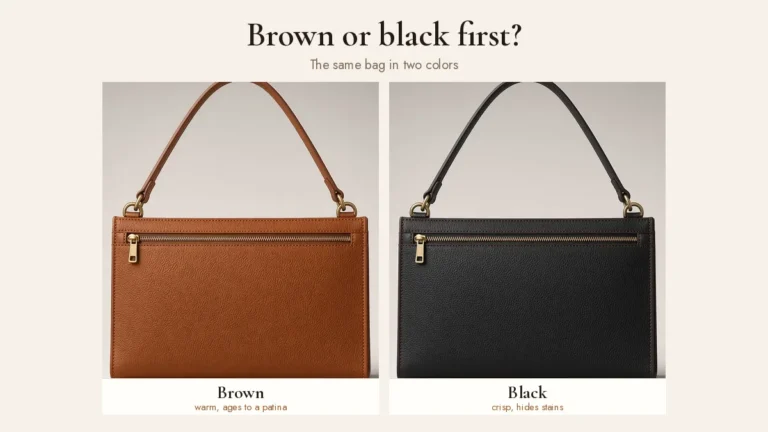
Color matters too: brown, black and tan cover most wardrobes. Our guide to what color purse to wear goes through each one, and full-grain leather ages to a richer shade over time, as explained in what is leather patina.
The 5 types of handbags every woman should own
If you are building a small handbag wardrobe, these five cover nearly every situation:
- A tote for work and busy days.
- A structured shoulder bag or satchel for everyday use and smart occasions.
- A crossbody for travel, weekends and hands-free days.
- A clutch or mini bag for evenings.
- A soft hobo or bucket bag for relaxed weekends.
Start with neutral colors in leather that will last, and add texture (suede, woven leather or hair-on hide) once the basics are covered. Our round-up of the best leather handbags for women goes deeper on choosing the first ones.
Structured vs unstructured, and what the closure tells you
Structured bags (satchels, top-handle bags, trapeze bags, work totes) have stiffened walls and a separate base panel, so they stand up on a desk and protect what is inside. Unstructured bags (hobos, slouchy shoulder bags, shoppers) are lighter and softer and mold to your side, but things move around inside.
| Closure | Security | Found on |
|---|---|---|
| Full zip | High | Shoulder bags, crossbodies, zip totes, hobos |
| Flap with turn-lock or buckle | High | Saddle bags, satchels, messengers |
| Magnetic snap or flap | Medium | Foldover clutches, slouchy bags, some totes |
| Drawstring | Medium | Bucket bags |
| Open top | Low | Boat totes, shoppers, many work totes |
If you are deciding between three of the most common everyday styles, our comparison of tote vs shoulder bag vs satchel puts them side by side.
Handbag terms you will see on product pages
- Drop: distance from the top of the strap or handle to the top of the bag.
- Gusset: the side panel that gives a bag its depth.
- Base panel: a separate piece of leather on the bottom that keeps the bag’s shape.
- Feet: small metal studs on the base that keep it off wet floors.
- Turn-lock: a metal clasp you twist to open, common on saddle bags and satchels.
- D-ring: the metal ring that attaches a strap to the bag.
- East-west / north-south: wider than tall / taller than wide.
- Full grain: leather that keeps its natural top surface, the strongest grade. See full grain vs top grain leather.
- Initials or monogram: letters pressed into the leather, blind (no color) or in gold print. On our bags, up to three initials are free.
How to make any handbag last
Whatever type you choose, three habits keep leather looking good: don’t overload it, wipe it with a dry cloth when it gets dusty, and store it stuffed and upright in a cotton dust bag when you are not using it. Our step-by-step guide on how to store a leather bag covers closets, humidity and long-term storage, and how to clean a leather bag covers stains.
Every bag shown in this guide is cut and stitched to order and dispatched in 5 to 7 working days. Browse the full range of leather handbags and purses.
Frequently asked questions
How many types of handbags are there?
There are around 35 types of handbags in common use, and lists that claim 40 or more usually count sub-styles separately. Almost all of them fall into four groups: by how you carry them (tote, shoulder bag, crossbody, clutch, backpack), by shape (hobo, bucket, saddle, baguette), by size (mini, micro) and by job (work tote, travel purse, diaper bag).
What are the main types of handbags?
The main types are the tote, shoulder bag, hobo, satchel, bucket bag, top-handle bag, crossbody, saddle bag, clutch and backpack. Between them they cover work, everyday, hands-free and evening use.
What is the difference between a purse and a handbag?
In the US the words are used interchangeably. Strictly, a handbag is a medium to large bag carried by a handle or on the shoulder, and a purse is a smaller bag, or in British English a coin wallet. Most shops use “purse” for small to medium shoulder and crossbody bags.
What is the most versatile type of handbag?
A structured shoulder bag or satchel with a detachable long strap is the most versatile, because it can be carried by hand, worn on the shoulder and worn crossbody. In a neutral leather like brown, black or tan, it works for the office and the weekend.
What type of handbag is best for work?
A work tote or laptop tote is best if you carry a laptop; check that it has a padded sleeve and a firm base. If you carry only a tablet or papers, a satchel or a structured shoulder bag looks sharper and is lighter.
What is a hobo style bag?
A hobo style bag is a soft, slouchy shoulder bag on a single strap that curves into a crescent when worn. It is unstructured, usually has a zip top, and holds more than it looks because the body expands.
What is the difference between a crossbody and a shoulder bag?
The strap. A crossbody has a long strap (about 20 to 24 inches of drop) worn diagonally across the body, so the bag sits at the opposite hip. A shoulder bag has a shorter strap (about 8 to 12 inches) that sits on one shoulder with the bag under your arm.
What is the safest type of purse to travel with?
A crossbody, saddle bag or sling with a full zip or a flap closure is the safest, because it sits in front of your body and can’t be lifted off a shoulder. Look for an inside zip pocket for your passport and cards.