What to Keep in Your Everyday Bag: The Checklist, the Pouch System and What to Leave Home
A good everyday bag holds what you use and nothing that weighs you down. Here is a checklist you can copy, a three-pouch system that makes switching bags take a minute, an emergency kit list, what to add for work and travel days, and what never to keep in your purse.
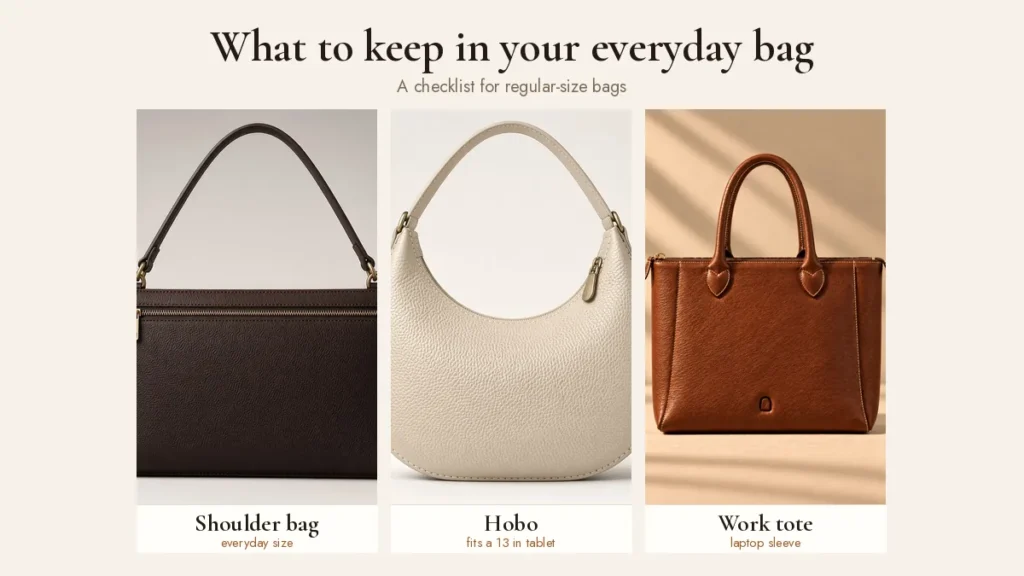
Keep these in your everyday bag: your phone, a cardholder or slim wallet with ID and a payment card, your keys, any medication you need, a small power bank and cable, lip balm, hand sanitizer, tissues, a pen and one small emergency pouch (bandages, a pain reliever, a hair tie, a safety pin and mints). Add sunglasses, a folded shopping bag and a water bottle when your bag and your day allow, and take out anything you haven’t used in a month.
This guide is for a regular everyday bag: a shoulder bag, a hobo or a tote. It covers the checklist, the three-pouch system that keeps it organized, what to add for work, travel and evenings, seasonal swaps, what not to carry, and how heavy a bag should be. If you are moving to something smaller, see small bag essentials instead.
Disclosure: We are a leather bag workshop and the product boxes show our own bags, with prices as listed in November 2026. The checklist works with any bag.
The everyday bag checklist
| Category | Every day | Add when you need it |
|---|---|---|
| Money and ID | Cardholder or slim wallet, ID, one payment card, a little cash | Transit card, insurance card |
| Phone and tech | Phone, small power bank, short cable | Earbuds |
| Keys | House and car keys | A key finder tag |
| Health | Daily or emergency medication, hand sanitizer, tissues | Allergy tablets, a face mask |
| Beauty | Lip balm, a small mirror | Hand cream, lipstick, blotting papers, a comb |
| Practical | A pen | Sunglasses, folded shopping bag, small notebook, compact umbrella |
| Food and drink | Mints or gum | Water bottle, a snack bar |
| Emergency pouch | Bandages, pain reliever, hair tie, safety pin | Stain-remover pen, period products, sewing kit |
The rule: carry the first column every day, and add from the second only what today calls for.
The essentials, explained
- A cardholder or slim wallet. Carry the cards you use, not every card you own. If you pay by phone, still carry one physical card in case the phone dies.
- Your phone, in its own pocket so it doesn’t share space with keys, which scratch screens.
- Keys, on a clip or in their own pocket, so you aren’t digging at the door.
- A small power bank and a short cable. A dead phone is now the most common everyday emergency, because tickets, payments and maps all live on it. A slim 5,000 mAh battery covers most days.
- Medication. Anything you need daily or in an emergency (an inhaler, an epinephrine auto-injector, antihistamines), in a clearly labeled pouch.
- Lip balm and hand sanitizer. Small, light and used every day.
- Tissues. A small pack covers colds, spills and sticky tables.
- A pen. For forms and signatures; a retractable one won’t leak into the lining.
The three-pouch system
The easiest way to keep a bag organized, and to switch bags in a minute, is to keep everything small in three pouches:
| Pouch | What goes in | Size |
|---|---|---|
| Emergency | Bandages, pain reliever, hair ties, safety pins, stain-remover pen, period products, a few dollars in cash | About 7 × 5 in |
| Tech | Power bank, cable, earbuds, a spare charger tip | About 6 × 4 in |
| Beauty | Lip products, mirror, hand cream, comb, blotting papers | About 7 × 4 in |
Your phone, cardholder and keys stay loose in fixed pockets so you can reach them without looking. Everything else lives in a pouch. When you change bags, you move three pouches and three loose items, and nothing gets left behind.
Pick pouches in different colors or textures so you can find each one by touch. Review the emergency pouch once a month: replace what you’ve used and take out what you never touch.
Choose a bag that helps
The bag itself does half the organizing. Look for:
- At least one inside zip pocket for cards and keys, and one open pocket for your phone.
- A closure you trust in a crowd. A full zip is the most secure; a flap with a proper clasp is close; an open-top tote is the least secure.
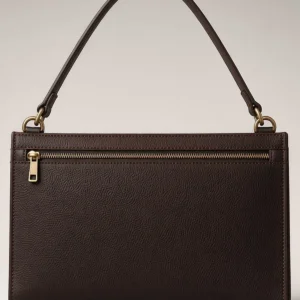
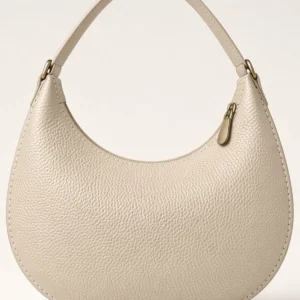
- A shape that suits your load. A structured shoulder bag keeps pouches upright and easy to see. A hobo swallows more, but things sink to the bottom of the curve, so pouches matter more. See hobo vs bucket vs slouchy bag for how each soft shape carries.
- A light lining if you can find one. It makes small dark items easier to spot.
What to add, by day
Work
- Laptop and charger in a padded sleeve, or leave the laptop at the office
- ID badge, notebook and pen
- Water bottle and a snack
- Earbuds or headphones
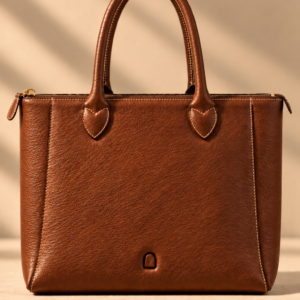
A laptop changes the bag: it needs a tote with a padded sleeve rather than a shoulder bag. Our guides to types of tote bags and the best leather work bags for women explain sizes.
Travel days
- Passport and boarding pass in a zip pocket you can reach easily
- Power bank and cable
- Cardholder with two cards, and a backup card kept somewhere else
- Earbuds, a pen for arrival forms, a light scarf
- Lip balm and hand cream in travel sizes (liquids of 3.4 oz or less in your carry-on if you are flying)
- An empty water bottle to fill after security
On travel days, a bag worn across the body is safer than one hanging from a shoulder. A sling bag with a hidden back pocket keeps a passport flat against you.

Evenings
Phone, cards and ID, keys, a lipstick and a little cash. That fits a mini crossbody or a clutch; see what fits in a mini bag.
With children
Wipes, snacks, bandages, a small toy and hand sanitizer. A tote or backpack is easier than a shoulder bag on these days.
Seasonal swaps
| Season | Add | Take out |
|---|---|---|
| Spring | Compact umbrella, allergy tablets, a light scarf | Gloves, heavy hand cream |
| Summer | Sunscreen stick, SPF lip balm, sunglasses, water bottle, blotting papers | Umbrella, if your climate allows |
| Fall | Umbrella, a thin layer, extra tissues | Sunscreen (keep the SPF lip balm) |
| Winter | Gloves, rich hand cream, a richer lip balm | Blotting papers |
Do the seasonal swap when you clear out the emergency pouch, so it becomes one job four times a year.
Go digital to carry less
- Payment cards in your phone wallet (keep one physical card).
- Loyalty and membership cards in their apps.
- Boarding passes and tickets as mobile passes.
- Receipts by email.
- Transit cards on your phone, where your city allows it.
The trade-off is that a dead phone strands you, which is why the power bank is on the everyday list.
What not to keep in your purse
Some things are a risk if your bag is lost or stolen; others just add weight.
- Your Social Security card, birth certificate or passport, unless you are traveling.
- Large amounts of cash.
- A spare house key together with anything that shows your address.
- Written passwords or PINs.
- Every loyalty card and receipt.
- Checkbooks you don’t need that day.
- Uncapped pens, open lipsticks and unsealed liquids. They stain linings and leather.
- Heavy “just in case” items, like a tablet you never open.
How heavy should your everyday bag be?
A common guideline is to carry no more than about 10 percent of your body weight, and less on one shoulder. A full everyday bag of 4 to 5 lb is comfortable for most people; a tote with a laptop can reach 8 to 10 lb.
To lighten it, choose a lighter bag (an empty leather shoulder bag is often 1.2 to 1.5 lb), carry a cardholder instead of a full wallet, take the laptop only when you need it, and switch shoulders or use a crossbody strap. If your shoulder aches, our guide to shoulder bag vs crossbody bag explains how each spreads the weight.
The weekly five-minute reset
- Empty the bag onto a table.
- Throw out receipts, wrappers and anything broken.
- Restock the emergency pouch and charge the power bank.
- Wipe out crumbs and check the lining for leaks.
- Put the pouches and loose items back in their places.
Protect your bag from what’s inside it
- Keep makeup and liquids in a sealed pouch; leaked foundation stains a lining for good.
- Keep pens capped or retractable.
- Keep keys away from your phone screen and the inside of light leather.
If something has already leaked, see how to clean a leather bag, and for bags you rotate out, see how to store a leather bag.
Browse our everyday leather purses or all leather handbags. Every bag is made to order and dispatched in 5 to 7 working days.
Frequently asked questions
What should I keep in my everyday bag?
Your phone, a cardholder or slim wallet with ID and a payment card, keys, any medication you need, a small power bank and cable, lip balm, hand sanitizer, tissues, a pen and a small emergency pouch.
What should be in a purse emergency kit?
Bandages, a pain reliever, hair ties, safety pins, mints, a stain-remover pen, period products, a mini sewing kit and a few dollars in cash, all in one small zip pouch.
What should you not keep in your purse?
Your Social Security card, birth certificate, passport unless you are traveling, large amounts of cash, written passwords, and a spare house key alongside anything showing your address.
How do I organize my purse?
Use three small pouches (emergency, tech, beauty), give your phone, cards and keys fixed pockets, choose a bag with an inside zip pocket, and clear it out once a week.
How heavy should a purse be?
Ideally no more than about 10 percent of your body weight, and less on one shoulder. Most people find 4 to 5 lb comfortable for an everyday bag.
What should I carry in my purse for work?
Your ID badge, cardholder, keys, phone, notebook and pen, earbuds, a water bottle, a snack and your emergency pouch. If you carry a laptop, use a tote with a padded sleeve.
How often should I clean out my purse?
Once a week: throw out receipts and wrappers, restock the emergency pouch, charge the power bank, and remove anything you haven’t used in a month.